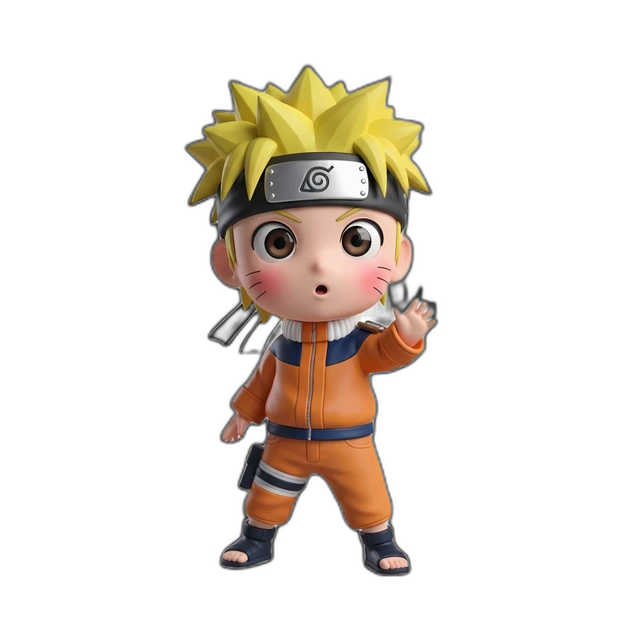
Naruto Uzumaki is the central protagonist of Masashi Kishimoto's Naruto manga and anime series, first introduced in 1999. Born as the jinchuriki of the Nine-Tailed Fox Kurama, Naruto grew up ostracized by the villagers of Konohagakure, unaware of the beast sealed inside him. Despite this lonely childhood, he harbored an unbreakable dream of becoming Hokage, the village's greatest leader, so that everyone would acknowledge his existence.
Naruto's journey spans over 700 chapters and 500 episodes, tracking his growth from a prankster failed the Academy graduation exam to a war hero who united the entire shinobi world. His defining traits are an refusal to give up on people, a talent for changing enemies into allies, and a raw determination that consistently outpaces natural-born prodigies. His fighting style centers on creative applications of the Shadow Clone Jutsu, the Rasengan techniques he refines across the series, and his unique bond with Kurama that evolves from antagonistic to brotherly.
As the Seventh Hokage, Naruto leads Konoha through an era of peace and technological progress. He marries Hinata Hyuga and fathers two children, Boruto and Himawari. His story continues in the sequel series Boruto: Naruto Next Generations, where he faces the challenges of leadership, fatherhood, and new threats that test the peace he fought to create.
Naruto Uzumaki is a young man of average height with fair skin, bright blue eyes, and spiky blonde hair. His most recognizable physical features are the three whisker-like marks on each cheek, a trait inherited from his status as Kurama's jinchuriki. In Part I of the series, Naruto wears an orange-and-blue tracksuit with a white collar, a Konoha headband on his forehead, and blue sandals. His orange outfit, chosen to match his vibrant and loud personality, became a defining character design in anime history.
As he matures into Part II, Naruto grows taller and his face becomes sharper. He wears a black-and-orange tracksuit with a high-collared jacket featuring the Uzumaki clan crest on the back, a larger Konoha headband, and a red scarf gifted by the Sunagakure siblings Gaara, Temari, and Kankuro. His whisker marks remain prominent but suit his older, more serious demeanor. During his Sage Mode training, he develops orange pigmentation around his eyes and horizontal slits in place of pupils when channeling natural energy.
In his adulthood as the Seventh Hokage, Naruto sports a much shorter hairstyle, a dark green haori coat over a simple tan shirt and black pants, with the traditional Hokage hat bearing the kanji for "Fire" (火). He retains his whisker marks and blue eyes but carries the weight of leadership in his expression. His post-timeskip design in Boruto adds a beard stubble and a more built physique, reflecting a man who has transitioned from warrior to statesman while remaining ready to defend his village at a moment's notice.
Naruto's personality is defined by his stubbornness, optimism, and insatiable need for recognition. Growing up as the village pariah, he channeled his loneliness into boisterous behavior, pulling pranks and shouting about his Hokage dream to force people to notice him. This facade of confidence masked deep insecurity, but rather than breaking him, the isolation forged an empathetic core that lets him understand people who have been hurt by the world. His catchphrases "Believe it!" (dattebayo in Japanese) and "This is my ninja way!" capture his refusal to back down from any challenge.
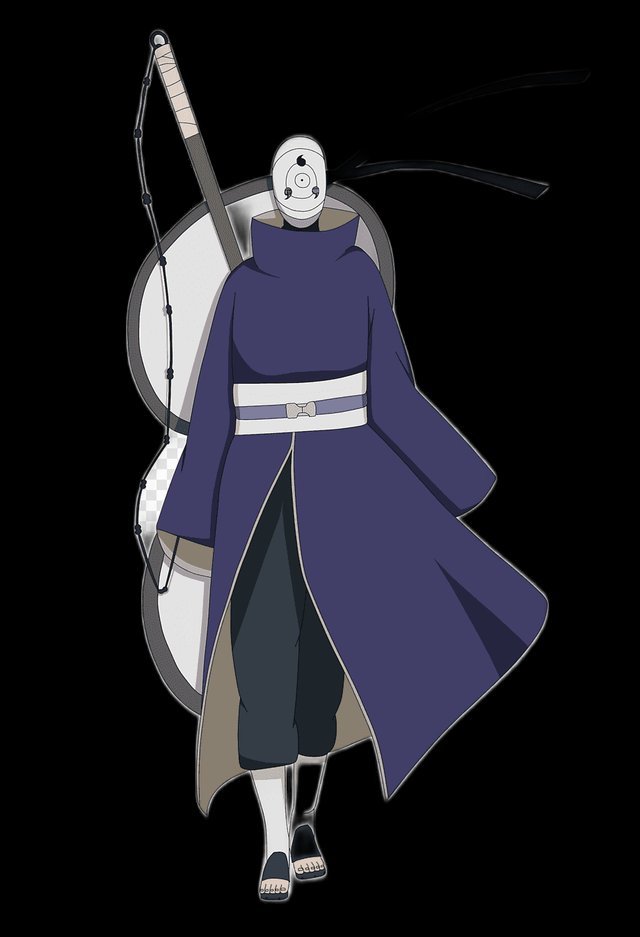
One of Naruto's signature traits is his ability to befriend enemies. He approaches antagonists like Zabuza, Gaara, Nagato, and Obito not with hatred but with a desire to understand their pain. He tells Gaara that someone who has experienced loneliness can recognize it in others, and he refuses to kill Nagato even after Jiraiya's death, instead extracting a promise to change. This empathy is not naive idealism. Naruto recognizes the cruelty of the shinobi world but refuses to let it define how he treats people. His ninja way is built on the principle that the strong must protect the weak and that cycle of hatred can be broken.
Naruto is also famously dense in romantic and academic matters. He fails to notice Hinata's long-standing affection for him, eats instant cup ramen as a daily staple, and relies on Shadow Clones to cheat the Academy's written exams. His appetite is legendary, matching his teacher Jiraiya's love for ramen at Ichiraku. As an adult, Naruto retains his playful side but has grown into a responsible leader who works tirelessly for his village, often neglecting his family duties, which strains his relationship with his son Boruto. This human mix of heroism and flaw makes him one of shonen anime's most beloved protagonists.
Naruto's most used technique and the only jutsu he mastered before becoming a genin. Unlike normal clones, Shadow Clones are solid duplicates that can interact with the physical world, use techniques, and transfer their battle experience to Naruto when dispelled. Naruto's enormous chakra reserves, amplified by Kurama, allow him to create hundreds or even thousands of clones simultaneously. He uses this for combat overwhelm, information gathering, training acceleration, and even menial tasks. The experience transfer effect made his training in Sage Mode and Rasenshuriken far faster than normal.
Jiraiya taught Naruto the Rasengan, a spinning ball of chakra invented by the Fourth Hokage Minato Namikaze. Over the series, Naruto customized it with his Nature Transformation (Wind Release) to create the Rasenshuriken, a shuriken-shaped projectile that attacks the target's cellular level. The Rasenshuriken initially damaged Naruto's own arm, requiring Sage Mode to throw it safely. During the war arc, he created the Massive Rasenshuriken and combined it with his Shadow Clones to devastate entire armies of the Ten-Tails' spawn.
After training at Mount Myoboku with the toads, Naruto learned to gather natural energy and enter Sage Mode. This state enhances his physical strength, speed, durability, and sensory abilities to superhuman levels. The horizontal slit pupils and orange eye pigmentation signal his active Sage Mode. He can sense chakra across vast distances and detect enemies without line of sight. Naruto's Sage Mode stands out because he uses Shadow Clones to gather natural energy passively, allowing him to maintain the mode longer than Jiraiya ever could.
After forcing Kurama to cooperate, Naruto accessed Kurama Chakra Mode, a golden chakra shroud with a tails-formed cloak that dramatically boosts all combat abilities. This mode grants flight, chakra arms for grabbing opponents, and a Tailed Beast Ball. Later, after receiving Hagoromo Otsutsuki's Six Paths Sage power, Naruto gained Six Paths Sage Mode, distinguished by a black chakra cross on his back and the ability to levitate. This power enabled him to stop a chakra rod with a single finger, heal Might Guy from near-fatal Eight Gates damage, sense the Ten-Tails' soul, and create a planet-sized Rasengan to clash with Sasuke in their final Valley of the End fight.
As a perfect jinchuriki, Naruto can access Kurama's chakra without losing control. He can also communicate with and borrow chakra from all nine Tailed Beasts after receiving chakra signatures from them during the war arc. This allows him to use combined elemental Rasenshuriken attacks using each tailed beast's unique chakra nature, making him the only shinobi who can wield all five basic nature transformations plus Yin and Yang Release.
Naruto's first serious mission as a genin puts him against the mercenary Zabuza Momochi and his apprentice Haku. During the fight, Naruto declares his ninja way during a speech defending Haku's body from Zabuza's blade, stating that in the ninja world, those who break the rules are scum, but those who abandon their friends are worse than scum. This resonates with Zabuza, who turns on the corrupt businessman Gato. This arc establishes Naruto's moral framework and shows his willingness to treat enemies with dignity.
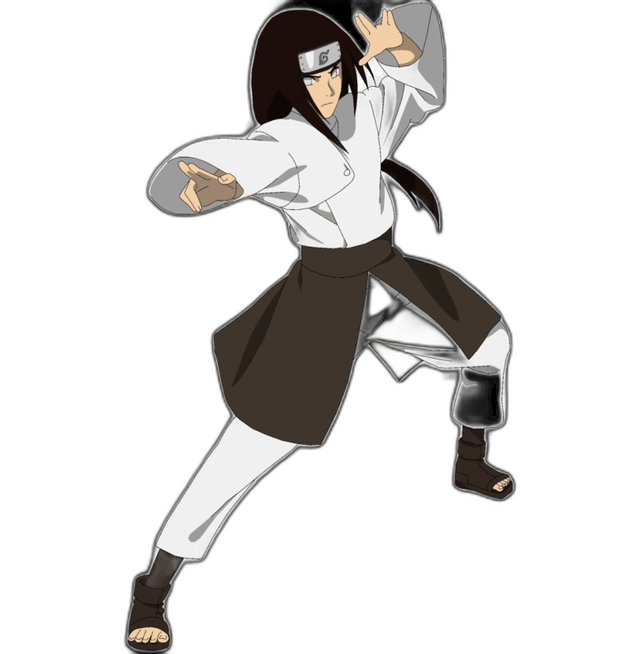
Naruto faces Orochimaru during the Forest of Death, fights the Sand shinobi Kankuro, and advances to the tournament bracket where he faces Neji Hyuga. Neji's belief that destiny is fixed and people cannot change pushes Naruto to victory through sheer refusal to accept predetermined fate. His speech after winning, telling Neji that "a failure can become a Hokage," plants the seed of change in Neji's worldview. This arc also introduces Naruto's rivalry with Sasuke, now sharpened by Sasuke's growing hunger for power following Orochimaru's curse mark.
The turning point of the entire series. Naruto returns to Konoha after Jiraiya's death and Sage Mode training to find the village destroyed by Pain, leader of the Akatsuki. Naruto defeats all six paths of Pain using Sage Mode-enhanced Rasenshuriken and, with Hinata's confession motivating him, nearly releases Kurama's full power. Pain traps him with the Chibaku Tensei technique, but Naruto breaks free with a surge of Kurama's chakra. Then, in the single most important scene of the series, he faces the real Nagato, tells him "I understand your pain, but I will find a different answer," and convinces him to revive everyone he killed. This moment makes Naruto the hero of the village he always wanted recognition from.
Naruto fights alongside the Allied Shinobi Forces against the reborn Edo Tensei shinobi and the Ten-Tails. He befriends Kurama during the war, achieving full jinchuriki control. He fights Obito Uchiha, who serves as a dark mirror of Naruto's own potential, and then Madara Uchiha, who overwhelms nearly everyone. After being seemingly killed by Madara, Naruto meets Hagoromo, the Sage of Six Paths, in his mindscape and receives the Six Paths Sage power. He returns, saves Might Guy from certain death, and rallies the entire Allied Forces. The climactic battle involves Naruto and Sasuke working together to seal Kaguya and then their final duel at the Valley of the End.
After Kaguya is sealed, Naruto and Sasuke fight one last time at the Valley of the End. Both use their full power: Naruto in Six Paths Sage Mode collecting nature energy, Sasuke with his Susanoo cloaked in Indra's Arrow. Both lose an arm in the final clash, symbolizing the sacrifice each has made. As they lie bleeding, Sasuke admits he lost and Naruto says he will carry Sasuke's hatred forever. They reconcile on the battlefield, ending their cycle of revenge. Sasuke leaves for a journey of atonement, and Naruto is hailed as the hero who broke the shinobi world's cycle of hatred. Years later, he becomes the Seventh Hokage.
The most important relationship in the series. Naruto sees Sasuke as both a rival and a brother. Their dynamic shifts from teammates to bitter enemies to reconciled equals. Naruto never gives up on Sasuke, even when the entire village brands him a traitor. His promise to Sakura to bring Sasuke back drives his growth across Part I and Part II. Their penultimate battle at the Final Valley encapsulates Naruto's refusal to let Sasuke destroy himself for revenge.
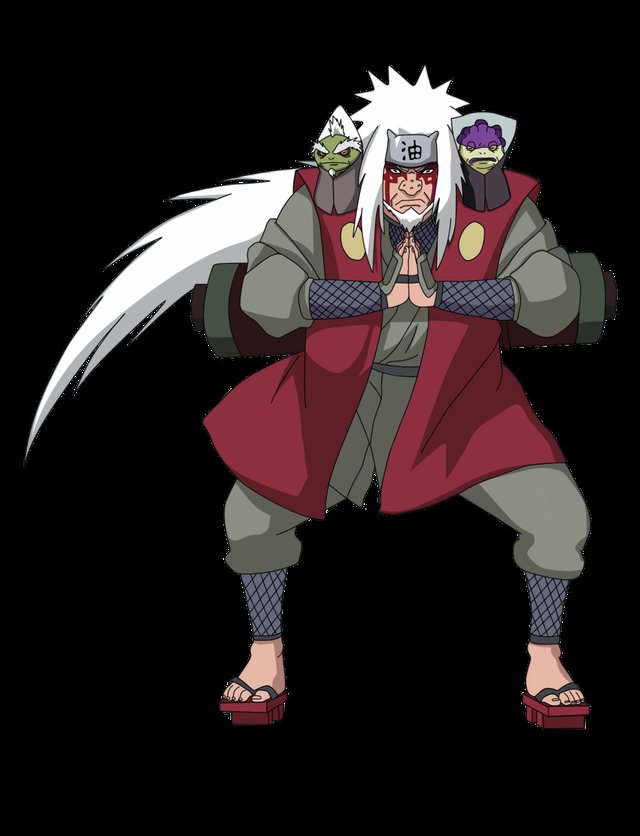
Jiraiya is the closest thing Naruto has to a grandfather. He trains Naruto in the Rasengan, teaches him about the ninja world, and guides his growth with wisdom earned from bitter experience. Jiraiya's death at the hands of Pain devastates Naruto, but he channels that grief into determination. Jiraiya's belief that Naruto is the Child of the Prophecy who would save the world becomes a self-fulfilling prophecy through Naruto's actions.
The Nine-Tailed Fox starts as Naruto's tormentor, leaking malevolent chakra that endangers everyone around him. Their relationship transforms from forced cohabitation to mutual respect after Naruto refuses to hate Kurama, instead recognizing him as a fellow being suffering from loneliness and hatred. Kurama's sacrifice in Boruto is the ultimate emotional payoff of this arc, with Kurama telling Naruto he was glad to be his last jinchuriki.
Hinata loved Naruto from childhood, drawn to his refusal to give up despite constant failure. She confesses her feelings while fighting Pain, stepping in front of certain death to protect him. Naruto, oblivious for years, eventually reciprocates. As adults, they marry and raise two children. Hinata becomes the emotional anchor of Naruto's family life, grounding the busy Hokage in his responsibilities as a husband and father.
Iruka is the first person to acknowledge Naruto for who he is, not for what he contains. After Naruto steals the Scroll of Seals, Iruka defends him from Mizuki and tells Naruto he recognizes his pain. This single moment of acceptance defines Naruto's entire character trajectory. At their wedding, Iruka stands as Naruto's father figure, and Naruto thanks him for being the first to believe.
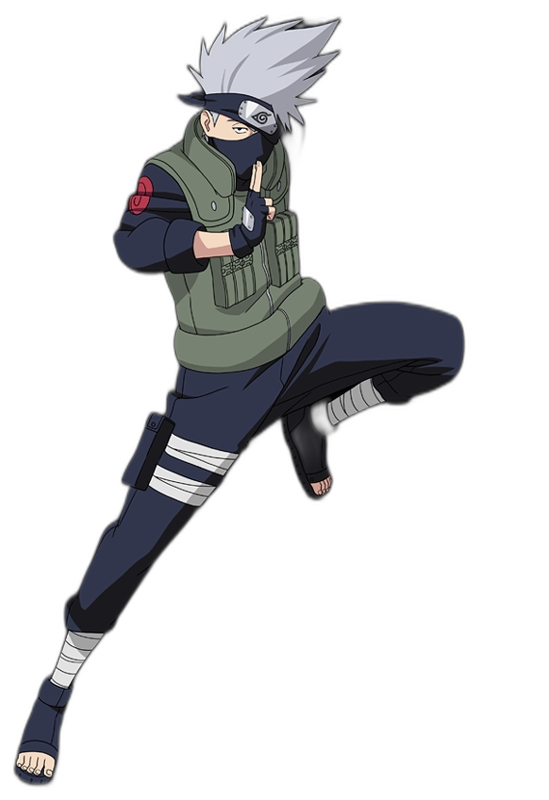
Kakashi teaches Team 7 and guides Naruto through early missions and the chunin exams. While Kakashi's teaching methods are often indirect, Naruto's core skills are shaped by Kakashi's influence. Kakashi's observation that Naruto's greatest strength is his ability to change people becomes the thematic thesis of the entire series. Kakashi later serves as the Sixth Hokage between Tsunade and Naruto, maintaining the village until Naruto is ready.
Naruto never knows his parents growing up. Minato, the Fourth Hokage, sealed Kurama into newborn Naruto minutes after sacrificing his life. Kushina, a former jinchuriki herself, passed on her willpower, stubbornness, and blazing red hair genes. Naruto meets Minato's consciousness during the Pain arc and Kushina's chakra imprint during the war arc. Learning their love for him and the reason they gave their lives gives Naruto closure and deepens his resolve to protect the village they died for.
Naruto Uzumaki ranks among the most recognizable fictional characters in the world. The Naruto manga has sold over 250 million copies worldwide, placing it among the top-selling manga series of all time. Naruto's image appears on merchandise ranging from apparel to video games, with the character ranked as the most popular shonen protagonist in multiple international polls. His orange jumpsuit and forehead protector became visual shorthand for anime culture in the global mainstream.
Naruto's narrative arc about an ostracized child rising through willpower and empathy resonates across cultural boundaries. Themes of loneliness, found family, and redemption through perseverance connect with audiences who see their own struggles mirrored in his journey. The "Talk no Jutsu" meme, referring to Naruto's signature ability to convert enemies through understanding rather than violence, reflects how deeply this approach defines the series. Fans in Japan, North America, Europe, Latin America, and Southeast Asia all grew up watching Naruto mature from a hyperactive child into a responsible leader.
Academic analysis of Naruto examines his role in representing trauma recovery, institutional prejudice, and the moral complexity of revenge. The character has been referenced in Western television shows like South Park and The Simpsons, and his voice actors in both Japanese (Junko Takeuchi) and English (Maile Flanagan) have become fixtures of anime conventions worldwide. Naruto's legacy extends through Boruto: Naruto Next Generations, where he appears as a supporting character and mentor, passing his ninja way to a new generation.
In Japan, Naruto statues and monuments exist in locations associated with the series, including a full-scale statue of him as Hokage. His birthday, October 10, is celebrated by fans globally. The character's influence on shonen battle manga is immeasurable, with nearly every major series from 2000 onward borrowing elements from Kishimoto's character design: the hero with a hidden power, the rival-as-best-friend dynamic, and the protagonist who befriends rather than defeats his enemies. Naruto Uzumaki did not just star in a franchise. He defined a generation of anime storytelling.
Naruto Uzumaki is the titular protagonist of Masashi Kishimoto's Naruto series. He is a shinobi from Konohagakure who rises from being the village outcast as the jinchuriki of the Nine-Tailed Fox, Kurama, to becoming the Seventh Hokage. His journey from rejection to heroism is the emotional core of the series.
Naruto's signature techniques include the Shadow Clone Jutsu, which he perfected to an unmatched degree, and the Rasengan, which he later evolved into the Rasenshuriken. His Sage Mode grants enhanced physical capabilities and sensory perception. After befriending Kurama, he gained access to Kurama Chakra Mode and later Six Paths Sage Mode, making him one of the strongest shinobi in history.
Naruto becomes the Seventh Hokage years after the Fourth Great Ninja War, having proven himself as a hero who saved the entire shinobi world. He marries Hinata Hyuga, has two children (Boruto and Himawari), and leads Konoha through an era of peace. His ascension to Hokage fulfills the lifelong dream he shouted from the rooftops as a lonely child.
Naruto's relationship with Kurama, the Nine-Tailed Fox, evolves from forced cohabitation to genuine friendship. Initially, Kurama's chakra would leak during emotional distress, putting Naruto in danger. Through Killer Bee's training and repeated cooperation, Naruto won Kurama's respect. They eventually became true partners, with Kurama sacrificing his life in Boruto: Naruto Next Generations to save Naruto and the village.
Naruto's most iconic battles include his final Valley of the End fight against Sasuke, the Pain invasion where he proved himself a hero, his chunin exam match against Neji that challenged the concept of destiny, the Zabuza arc speech that established his ninja way, and the war arc battle against Obito and Madara. Each fight marked a turning point in his growth as a shinobi and as a person.