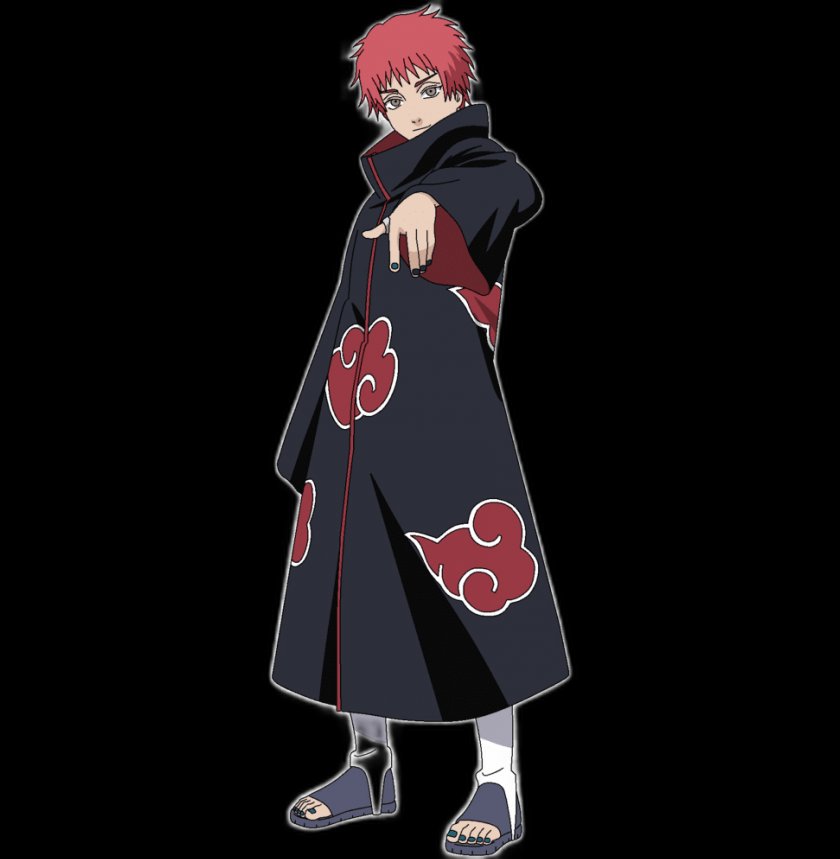
Red Sand Sasori was a missing-nin from Sunagakure and the grandson of the legendary puppeteer Chiyo. He converted his own body into a human puppet, reducing his existence to a heart core that could be transferred between bodies. He commanded 298 puppets, including the feared Third Kazekage puppet, and refined a lethal paralysis poison over decades of obsessive craft.
Overview
Sasori was born in Sunagakure to a family with a prestigious puppeteering lineage. His parents died in the Third Great Ninja War, leaving him in the care of his grandmother Chiyo, who taught him the fundamentals of puppet combat. Sasori excelled rapidly, developing techniques that surpassed his grandmother's by the time he reached adolescence.
The emotional trauma of losing his parents drove Sasori to a dark conclusion: flesh and blood were fragile and impermanent, but a puppet could last forever. He began experimenting on living subjects, refining his craft until he could convert a human body into a fully functional puppet — called a Human Puppet — that preserved the victim's original abilities. His most prized creation was the Third Kazekage puppet, which retained the Magnet Release kekkei genkai of the former Kage.
Sasori defected from Sunagakure after the Third Kazekage's disappearance and joined the Akatsuki. He operated under the codename "Red Sand," a reference to his habit of using his victims' blood-stained sand in his early work. Within the Akatsuki, he was known for his cold efficiency and his philosophical conviction that art should be eternal, not fleeting.
Appearance
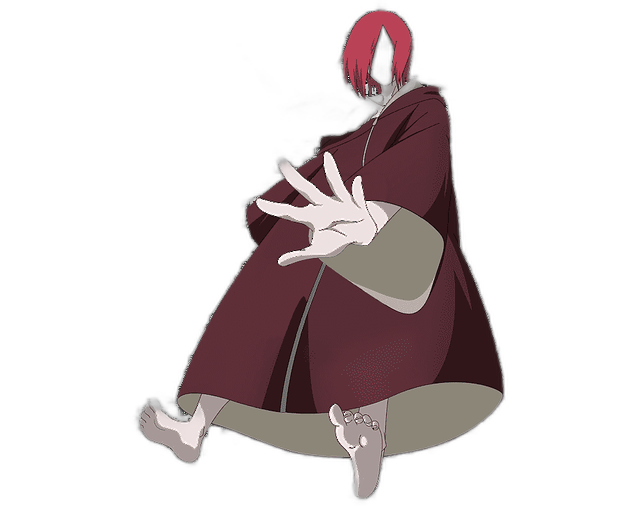
Sasori's natural body before his transformation appeared as a young boy with bright red hair, a pointed chin, and large eyes that gave him a perpetually youthful look. This appearance was deceiving — he was actually in his thirties by the time of his introduction. His most prominent feature was his fiery red hair, which he inherited from his grandmother Chiyo.
After converting himself into a puppet, Sasori's real body became a hollow shell with a cylindrical scroll-core in his chest that contained his heart and vital functions. He transferred this core into various puppet bodies over time, but his primary combat puppet was Hiruko — a massive, scorpion-like puppet with a segmented tail and hidden blade mechanisms. Hiruko's design drew from his namesake (sasori means "scorpion" in Japanese) and featured multiple secret compartments for weapons.
When Sasori emerged from Hiruko for the first time, he revealed his youthful puppet body wearing a dark grey coat with red interior, loose black pants, and the Akatsuki cloak draped over his shoulders. His skin showed visible joint lines at the wrists, neck, and shoulders betraying his puppet nature. The face of his puppet body maintained a fixed, childlike expression that contrasted with his cold adult voice.
Personality
Sasori was defined by his nihilistic pragmatism and his absolute devotion to the concept of eternal art. He viewed emotions as weakness and the human body as a flawed vessel. His philosophy — that art reaches its truest form when it can be preserved forever — guided every action he took. He showed no remorse for turning humans into puppets, arguing that he was giving them a form that would never decay.
Despite his cold exterior, Sasori retained traces of the child who lost his parents. When Chiyo confronted him during their final battle, he admitted to creating the Third Kazekage puppet partly because the former Kage shared his parents' red hair color — a subtle confession that his obsession with puppetry was rooted in a desire to preserve what he could not keep alive.
Sasori had a sardonic wit and displayed a particular disdain for Deidara's explosive art philosophy. Their arguments over what constituted true art were a running gag within the Akatsuki. He preferred clean, precise kills with minimal movement — opposite to Deidara's dramatic explosions. He was patient in combat, waiting for the perfect opening rather than overwhelming his opponents with brute force.
In his final moments, Sasori demonstrated a rare moment of genuine human connection. When Chiyo drove the poisoned blades toward his heart core, he did not dodge. He allowed his grandmother to end his existence, suggesting that some part of him still recognized the bond they once shared.
Abilities
Sasori was widely regarded as the greatest puppet master in shinobi history. He could control up to 298 puppets simultaneously through invisible chakra threads — a feat no other puppeteer had ever achieved. Standard puppeteers could manage a maximum of ten puppets at once, making Sasori's control capacity nearly thirty times that of a prodigy.
The centerpiece of Sasori's collection was the Third Kazekage Puppet, converted from the strongest Kage in Sunagakure's history. This puppet retained the Third Kazekage's Magnet Release ability, which allowed it to control iron sand (satetsu) in fluid forms — shaping it into weapons, defensive shields, or the devastating Iron Sand Imperial Peacock attack. The iron sand contained microscopic particles of the paralysis poison, making every wound potentially fatal.
Sasori's signature technique was the Red Secret Technique: Performance of a Hundred Puppets, where he deployed 100 puppets simultaneously, each controlled by a separate chakra thread. The puppets formed coordinated attack patterns and surrounded opponents from every angle. He stored the puppet army inside a large scroll marked with the kanji for "red."
He refined a paralysis poison over many years, testing and improving its potency. The final formula caused complete muscular paralysis within three days of entry into the bloodstream, leaving the victim fully conscious but unable to move a single muscle. The paralysis spread from the wound outward, and death followed when the diaphragm eventually stopped. Only Sasori and Chiyo knew the full antidote formula.
Sasori's Hiruko puppet was his primary combat vessel — a scorpion-like exoskeleton armed with hidden blades, senbon launchers, and a tail spike that delivered the paralysis poison. Hiruko had five layers of defensive mechanisms, each designed to surprise enemies who thought they had breached his defenses. When Hiruko was destroyed, Sasori revealed his true puppet body, equipped with retractable blade arms and reinforced joints.
Story Arcs
The Third Kazekage Disappearance: Years before the main timeline, Sasori assassinated the Third Kazekage of Sunagakure and converted his body into a Human Puppet. This act destabilized the Hidden Sand village and led to a period of tension with Konoha. Sunagakure never discovered the fate of their Kage until the truth was revealed during Sasori's battle with Chiyo and Sakura.
Gaara Capture and Kazekage Rescue Arc: Sasori and Deidara were dispatched to capture Gaara, the One Tail jinchuriki, shortly after he became Kazekage. Deidara successfully captured Gaara while Sasori provided backup. When Naruto's rescue team arrived, Sasori faced his grandmother Chiyo and Sakura Haruno in the Akatsuki hideout in the Land of Rivers. He fought using Hiruko initially, then revealed his puppet body after Hiruko was destroyed. His battle with Chiyo was emotionally charged — Chiyo used the same techniques she had taught him as a child.
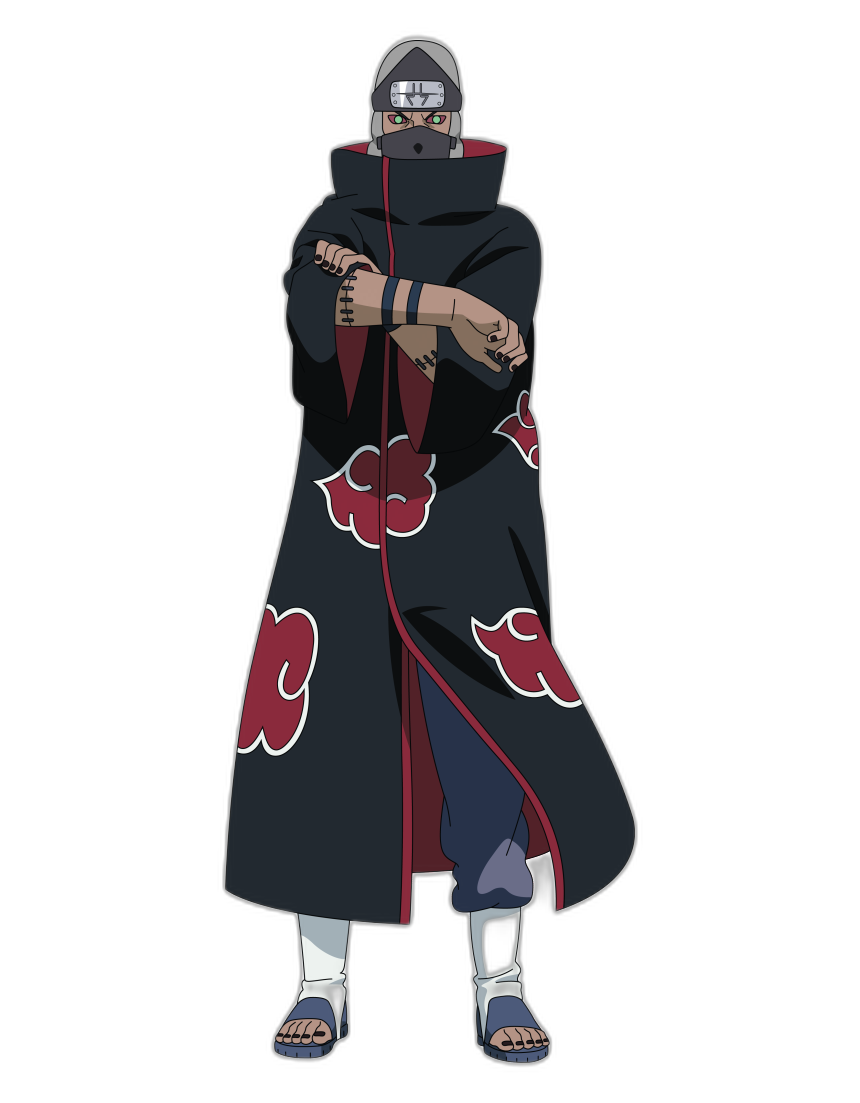
Death and Legacy: During the climax of the battle, Sasori was struck by two of his own poisoned blades driven by Chiyo, piercing his heart core. He did not avoid the fatal blow. Before dying, he revealed important information to Chiyo and Sakura — telling them about the Akatsuki's spy (Kabuto) within Orochimaru's organization and arranging a meeting with the spy through his contact network. This intelligence proved valuable in the later hunt for Akatsuki members.
Relationships
Chiyo: Sasori's grandmother and the woman who taught him puppetry. She was his first teacher and the only person who truly understood him. Their final battle was a tragic reunion — Chiyo used her own White Secret Technique (Ten Puppets of Chikamatsu) against Sasori's Red Secret Technique. In the end, she was the one who delivered the killing blow, ending her grandson's life with the same tools she had given him as a child.
Deidara: Sasori's Akatsuki partner, chosen by Pain because their personalities clashed. Deidara's explosive, fleeting art philosophy directly opposed Sasori's eternal preservation view. They bickered constantly but maintained a grudging professional respect. Deidara was the one who admired Sasori's skill enough to lie about their partnership during Gaara's interrogation, claiming they worked well together.
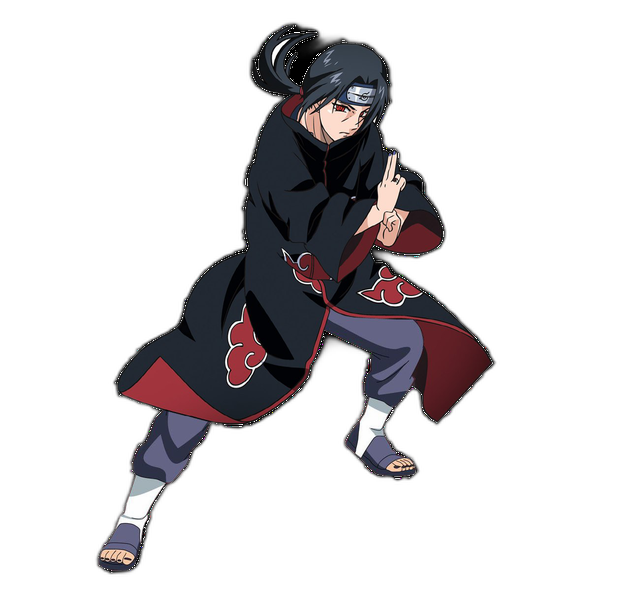
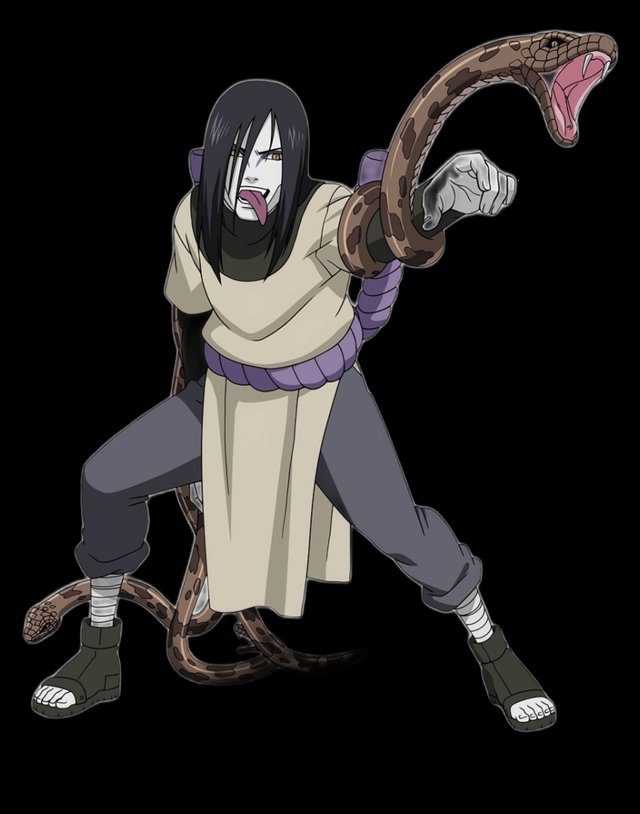
Orochimaru: A former Akatsuki colleague who defected before Sasori's introduction. Sasori was assigned to eliminate Orochimaru but failed. He later recruited Kabuto as a spy to infiltrate Orochimaru's ranks, demonstrating his long-term strategic thinking. His relationship with Orochimaru was purely transactional — each recognized the other as a kindred spirit in amoral research.
Sakura Haruno: One of Sasori's opponents in his final battle. He underestimated Sakura initially, but she broke through Hiruko's defenses and later landed a direct hit that damaged one of his puppet arms. Sasori's poison nearly killed Sakura, but Chiyo sacrificed her remaining life force to administer the antidote. Their brief battle demonstrated the gap between a talented apprentice and a master puppeteer.
Cultural Impact
Sasori remains a tragic figure in the Naruto series. His backstory — a child who lost his parents and tried to escape the pain of loss through absolute control — resonated with audiences because it was grounded in recognizable human grief. His philosophy of eternal art was not presented as pure evil but as a twisted coping mechanism.
The Performance of a Hundred Puppets technique is frequently discussed in Naruto power-level analyses as a visually impressive and strategically complex ability in the series. The image of 100 puppets descending from a giant scroll while Sasori directs them from his perch remains an iconic moment in Naruto Shippuden.
Sasori's death scene — choosing not to dodge his grandmother's attack — is analyzed as one of the series' most subtle character moments. It suggested that beneath his puppet exterior, he retained enough humanity to recognize that his existence had become hollow. The parallel between his puppet self and his emotional emptiness is a theme that fans continue to explore in analysis videos and essays.
In the Akatsuki rankings, Sasori consistently places in the top ten most popular members. His scorpion motif, red hair, and unique combat style make him a favorite for cosplay and fan art. The Hiruko puppet is frequently recreated in action figure form.
Frequently Asked Questions
How did Sasori turn himself into a puppet?
Sasori converted his own body into a puppet by hollowing out his torso and placing a scroll containing his vital functions — essentially his heart — inside a cylindrical core. This core could be transferred between puppet bodies, making him functionally immortal as long as the core remained intact. He could survive decapitation, dismemberment, and most forms of physical damage.
How many puppets did Sasori control?
Sasori commanded 298 puppets total. His collection included the Third Kazekage puppet (his most powerful human puppet), various Human Puppets converted from defeated enemies, and the Red Secret Technique: Performance of a Hundred Puppets — 100 puppets controlled simultaneously through chakra threads, a feat no other puppeteer in history could match.
Who killed Sasori?
Sasori was killed by his own grandmother, Chiyo, with assistance from Sakura Haruno. After a prolonged battle, Chiyo drove two of Sasori's own poisoned blades into his heart core. He chose not to dodge the final blow, suggesting he accepted his death at his grandmother's hands as a form of closure.
What was Sasori's poison?
Sasori refined a potent paralysis poison over decades of experimentation. It caused complete muscular paralysis within three days of entering the bloodstream, leaving the victim conscious but unable to move or speak. Only Sasori himself and his grandmother Chiyo possessed the complete antidote formula, which required a specific sequence of ingredients to neutralize.
Why did Sasori join the Akatsuki?
Sasori joined the Akatsuki after defecting from Sunagakure, seeking the resources and freedom to pursue his puppet craft without moral restraint. The organization provided access to powerful targets for his Human Puppet collection and the autonomy to continue his research into eternal preservation through puppetry.