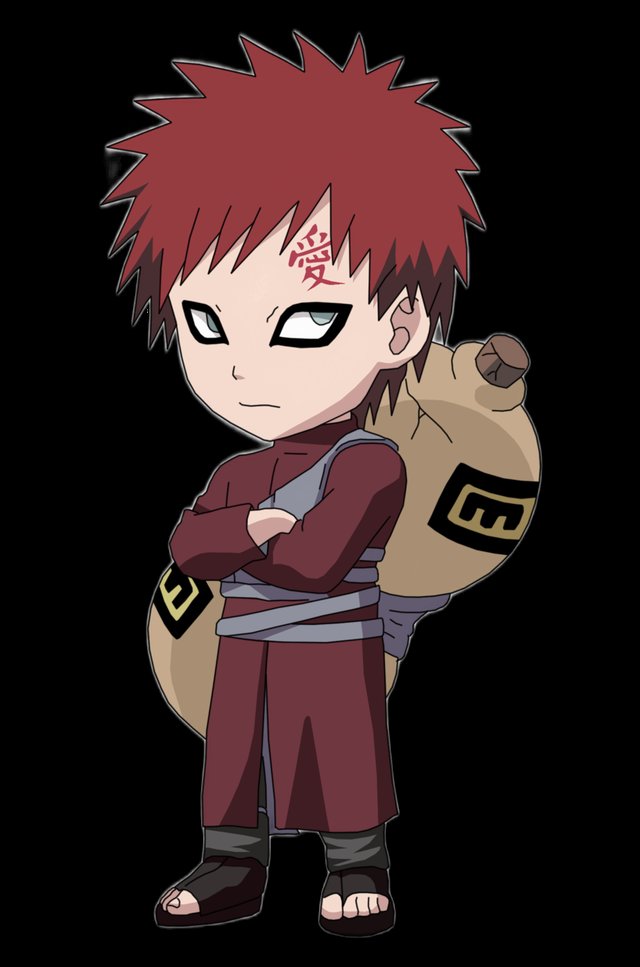
Former One-Tail Jinchuriki turned beloved Kazekage. Sand manipulation and absolute defense — from monster child to the Suna's greatest leader.
Fifth Kazekage / Jinchuriki · Former One-Tail Jinchuriki turned beloved Kazekage.
Overview
Gaara is the Fifth Kazekage of Sunagakure, the hidden village of the Land of Wind. Born as the youngest child of the Fourth Kazekage, he was made the jinchuriki of the One-Tailed Shukaku shortly after birth. This cursed him to a childhood of isolation and fear — his own village saw him as a monster, his father ordered his assassination, and his siblings kept their distance. The sand he carries automatically protected him from all harm, but it also kept everyone away.
His journey from a sociopathic killer who found meaning only in murder to a beloved leader who would sacrifice everything for his people is the defining narrative arc in Naruto's early story. After losing Shukaku to the Akatsuki and nearly dying, Gaara rebuilt himself without the tailed beast that had defined his existence. He proved that his worth was never tied to the monster inside him. As Kazekage, he is respected for his wisdom, feared for his power, and loved for his compassion.
Appearance
Gaara has distinctive short red hair inherited from his father, pale skin, and sharp turquoise eyes with dark circles underneath caused by Shukaku preventing him from sleeping. He carries a large gourd made of sand on his back, filled with sand infused with his mother Karura's chakra — this sand automatically protects him from any threat. His forehead bears a red tattoo of the kanji for "love" (愛), which he carved into himself as a child.
As Kazekage, Gaara wears a long white haori with blue trim over a dark blue kimono-style outfit. He often carries a straw hat with the kanji for "wind" (風) hanging from his neck by a cord. Despite his young age, he carries himself with the gravity of an elder statesman. His gourd remains with him at all times, a permanent reminder of his past and the power he commands.
Personality
Gaara's personality undergoes the most complete transformation in the Naruto series. Before his redemption, he is presented as a cold-blooded killer who enjoys inflicting pain on others. He speaks in a flat, emotionless tone and shows zero empathy. His philosophy is simple: he exists to kill, and killing validates his existence. The kanji on his forehead reads "love" because he believes loving only himself is the only path forward in a world that hates him.
After Naruto shows him that loneliness is a shared pain rather than a personal curse, Gaara transforms into a calm, softly spoken leader. He rarely raises his voice but speaks with absolute authority. He values every life in his village and carries the weight of his past sins with quiet regret. As Kazekage, he is diplomatic and patient, willing to listen before acting. He retains a dry wit that surfaces in quiet moments and a deep appreciation for the bonds he once thought impossible. His love for Suna is fierce and unconditional.
Abilities & Powers
Gaara's primary ability is sand manipulation (Sabaku), allowing him to control sand for offense, defense, and mobility. His Absolute Defense is among the most feared abilities in the series — sand infused with his mother's chakra automatically rises to block any attack, creating a protective barrier around him at all times. This defense once blocked an explosive clay bird from Deidara and survived direct hits from Rock Lee's weights-off assault.
His offensive techniques are brutal and efficient. Sand Coffin (Sabaku Kyu) encases a target in sand and crushes them. Sand Funeral (Sabaku So) follows Sand Coffin with lethal compression. Sand Tsunami (Ryusa Bakuryu) transforms the ground into a massive wave of sand that can bury entire armies. Sand Shuriken fires compressed sand projectiles at high speed. He also created the Sand Eye technique, which lets him see through a floating orb of sand from a distance.
After losing Shukaku, Gaara retained and even strengthened his sand abilities, proving they were his own latent powers all along. He learned to fly by riding a sand cloud and can sense enemies through sand particles spread across large areas. His tactical mind makes him a formidable commander, as shown when he led the Allied Shinobi Forces' Fourth Division during the Fourth Shinobi World War. He can also summon Shukaku in a partial transformation when needed.
Story Arcs
Chunin Exams Arc
Gaara is introduced as the terrifying jinchuriki of Sunagakure. During the Forest of Death, he brutally defeats Team 7's members with casual cruelty. His fight against Rock Lee establishes him as an unstoppable force — Lee's Leaf Gate attacks break Gaara's sand armor but not his will. When Lee collapses, Gaara tries to crush him, forcing Lee's teammates to intervene. This arc establishes Gaara as the most dangerous participant in the exams.
Konoha Crush Arc
Gaara attacks Konoha alongside his father's forces as part of Orochimaru's invasion plan. He unleashes Shukaku in a partial transformation, terrorizing the village. His battle against Naruto on the rooftop is the turning point of his life. Naruto summons Gamabunta and fights Gaara as a giant tanuki-versus-toad battle. More than the physical fight, it is Naruto's words about loneliness and shared pain that break through Gaara's shell. For the first time, Gaara breaks down crying, realizing he is not alone.
Kazekage Rescue Arc
Now a beloved Kazekage, Gaara is captured by Deidara of the Akatsuki. Deidara extracts Shukaku over three days, killing Gaara. The Leaf and Sand ninja join forces to rescue him. Chiyo revives Gaara using the One's Own Life Reincarnation technique, sacrificing herself to bring him back. This arc cements Gaara's importance — his people and allies were willing to risk everything to save the man who was once their greatest fear.
Fourth Shinobi World War Arc
Gaara serves as the Fourth Division commander of the Allied Shinobi Forces. He delivers a stirring speech about how Naruto's ability to connect with others is the shinobi world's greatest weapon. He fights his resurrected father Rasa, who finally acknowledges Gaara as a worthy son and Kazekage. Gaara also helps seal the revived tailed beasts and fights against Madara and Obito. By the end of the war, he stands as among the most respected Kage in history.
Relationships
Naruto Uzumaki: The friendship that saved Gaara's soul. Naruto was the first person who truly understood Gaara's pain without fear or pity. Their shared experience as jinchuriki created an instant bond that transcended village borders. Gaara considers Naruto his closest friend and credits him with changing his life. When Naruto struggles, Gaara is among the first to offer support, showing up personally during the Five Kage Summit to back Naruto's cause.
Temari and Kankuro: His siblings feared him as children but grew to love him as adults. They are his most trusted advisors and the only family he has left. Kankuro serves as his right hand, and Temari's diplomatic skills complement Gaara's leadership. Their relationship is a testament to how much Gaara has changed — the brother they once feared is now the brother they protect.
Rasa (Fourth Kazekage): His father ordered his assassination and treated him as a failed weapon. When reanimated during the war, Rasa attacks Gaara but eventually breaks down, apologizing for the cruelty he inflicted on his own son. He admits Gaara exceeded all expectations and expresses pride in the Kazekage he became.
Shukaku: The One-Tailed beast tormented Gaara throughout his childhood, preventing him from sleeping and feeding on his negative emotions. After their separation, Shukaku is freed and later befriends Gaara on better terms. During the war, they fight alongside each other, and Gaara shows respect toward the beast that once cursed him.
Cultural Impact & Legacy
Gaara's redemption arc is frequently ranked among the best character transformations in anime history. He proved that a character introduced as a pure villain could evolve into among the most beloved figures in the series without losing their edge. His backstory — the lonely child no one would touch, the jinchuriki feared by his own village — resonated with audiences worldwide who understood what it felt like to be an outsider.
His line "People who cannot acknowledge others are the ones who are the loneliest" and his tearful breakdown after Naruto's words of understanding are iconic moments in anime. Gaara represents the core Naruto theme that connection and empathy can overcome even the deepest hatred. His influence extends beyond the series — fan communities frequently cite him as the gold standard for redemption arcs, and his popularity has remained consistent from the original series through Boruto, where he appears as a wise and respected elder statesman.
Frequently Asked Questions
Why does Gaara have a tattoo on his forehead?
The kanji "ai" (love) on Gaara's forehead was a tattoo he gave himself as a child. It originally represented that he loved only himself, a defense mechanism against the hatred he faced from everyone in Suna. After Naruto showed him the power of connection, the meaning shifted to love for his village and his people.
How did Gaara keep his sand powers after losing Shukaku?
Gaara retained his sand abilities because they were always his own latent powers as a jinchuriki, amplified by Shukaku's presence. Years of training and daily use made the techniques his own. His mother Karura's protective sand chakra also continued to function independently of the tailed beast.
What is Gaara's relationship with Naruto Uzumaki?
Gaara and Naruto share one of the series' deepest bonds. Both were jinchuriki who grew up isolated and hated by their villages. After Naruto defeated Gaara and showed him genuine understanding, Gaara transformed completely, going on to become Kazekage. They remain close friends, and Gaara credits Naruto with saving his soul.
Who is the strongest Kazekage in Naruto history?
Gaara is widely considered the strongest Kazekage, followed by the Third Kazekage whose Iron Sand was feared across the shinobi nations. Gaara's mastery of sand manipulation combined with tactical intelligence, flight capability, and wide-area sand sensing give him an edge over his predecessors.
Did Gaara's father really try to kill him?
Yes, the Fourth Kazekage Rasa ordered multiple assassination attempts against Gaara, viewing him as a failed experiment after Shukaku proved too difficult to control. This betrayal shattered Gaara's psyche as a child. When reanimated during the Fourth Shinobi World War, Rasa apologized to Gaara and finally expressed pride in his son's achievements.