Overview
Kirigakure, meaning "Village Hidden in the Mist," is the hidden village of the Land of Water, one of the Five Great Shinobi Villages. Situated on a remote archipelago shrouded in constant fog, Kirigakure developed a fierce reputation as the most brutal and feared of all hidden villages. The village's natural defenses of mist, treacherous currents, and rocky coastlines made it nearly impregnable, while its shinobi were trained from childhood to be ruthless warriors. As the village of the Mizukage, Kirigakure has produced some of the most feared shinobi in the Naruto world, including the legendary Seven Ninja Swordsmen of the Mist.
The village's architecture is adapted to its maritime environment, with buildings constructed on stilts over water, connected by bridges and ropeways. The constant mist that gives the village its name serves both as a natural camouflage and a psychological weapon, creating an atmosphere of mystery and danger. Kirigakure's economy is built around fishing, maritime trade, and mission income, though the village's isolationist policies under previous leadership hampered economic development. The village maintains a strong naval force and specializes in Water Release techniques and sword-based combat.
Throughout the Naruto series, Kirigakure undergoes one of the most dramatic transformations of any hidden village. From its origins as the "Bloody Mist" under brutal leadership to its reformation under the Fifth Mizukage Mei Terumi, Kirigakure's story is one of redemption and renewal. The village produced notable allies and enemies of Konohagakure, from the feared rogue ninja Zabuza Momochi and Kisame Hoshigaki of the Akatsuki, to the loyal Allied Shinobi Forces who fought alongside Naruto in the Fourth Great Ninja War. Kirigakure's journey from isolation to international cooperation mirrors the broader themes of change and reconciliation in the Naruto series.
History & Founding
Kirigakure was established as one of the original hidden villages during the founding era, alongside Konohagakure, Sunagakure, Iwagakure, and Kumogakure. The First Mizukage, Byakuren, unified the warring clans of the Land of Water, creating a village that leveraged the archipelago's natural defenses. From its founding, Kirigakure developed a distinct warrior culture that valued strength above all else, a philosophy that would eventually lead to the brutal practices that defined the village for generations.
The early history of Kirigakure was marked by internal power struggles and the consolidation of the Mizukage's authority. The village's remote island location allowed it to develop independently, avoiding the full brunt of the early Great Ninja Wars that devastated the continental nations. However, this isolation also fostered a culture of paranoia and brutality. The graduation examination system that required students to kill each other originated during this period, supposedly as a way to ensure only the strongest survived to become shinobi. This practice earned Kirigakure the infamous nickname "Bloody Mist" and created a generation of emotionally scarred warriors.
The Fourth Mizukage, Yagura, was a jinchuriki who hosted the Three-Tails Isobu. Unbeknownst to the village, Yagura was placed under Obito Uchiha's genjutsu control, transforming Kirigakure into a closed, paranoid dictatorship. During this period, the village's brutal policies intensified. Zabuza Momochi attempted a coup d'etat against Yagura, failed, and fled to become a missing-nin, taking Haku with him. The Yuki clan was persecuted for their Ice Release Kekkei Genkai, leading to Haku's family being killed. The Mist's tracking ninja relentlessly pursued defectors, earning the village a fearsome reputation for never letting anyone leave alive.
The end of Yagura's rule came when he died, allowing the Three-Tails to be released into the wild. Mei Terumi, who had been building a resistance movement, emerged as the Fifth Mizukage and immediately began reforming the village. She abolished the Bloody Mist graduation exams, reopened diplomatic channels, and began the long process of rebuilding Kirigakure's reputation. Under Mei, the village transformed from the most feared hidden village to a respected member of the international community, participating in the Allied Shinobi Forces and eventually hosting the Sixth Mizukage Chojuro, who continued her reformist policies into the Boruto era.
Leadership & Government
Kirigakure's government is centered on the Mizukage, the village's supreme military and political leader. Unlike Konoha's more democratic Jounin Council system, Kirigakure's Mizukage selection has historically been influenced by the village's powerful shinobi clans and military factions. The six known Mizukage are Byakuren (First), two unnamed predecessors (Second and Third), Yagura (Fourth), Mei Terumi (Fifth), and Chojuro (Sixth). The early Mizukage were selected primarily for their combat ability and ruthlessness, a tradition that changed dramatically with Mei's ascension.
The Mizukage's administration includes several key institutions. The village council, composed of senior clan representatives and retired elite shinobi, advises on policy matters. The ANBU-like intelligence division handles covert operations and internal security. The Hunter-nin are a specialized Kirigakure force tasked with tracking and eliminating missing-nin from the village, particularly those who possess Kekkei Genkai that could be exploited by enemies. The Hunter-nin are known for their relentless pursuit and their practice of recovering and disposing of bodies to protect village secrets.
The Seven Ninja Swordsmen of the Mist constitute a unique military institution within Kirigakure's government. This elite group of seven shinobi wield legendary swords, each with unique abilities, and serve as the village's special operations force. Membership in the Seven Swordsmen is one of the highest honors in Kirigakure, and the group has a semi-autonomous status within the village's military hierarchy. However, the group has suffered from defections over the years, with Zabuza, Kisame, and others leaving Kirigakure for various reasons, weakening the institution significantly.
Under Mei Terumi's leadership, Kirigakure's government underwent significant institutional reform. She established a more transparent decision-making process, reduced the power of military factions, and created diplomatic departments to handle foreign relations. Chojuro, her successor, continued these reforms, emphasizing cooperation with the other Kage and modernization of Kirigakure's infrastructure. The village now participates in all major international forums, hosts exchange programs with other villages, and has become a model for how a formerly isolated state can integrate into the global community while preserving its unique cultural identity.
Notable Landmarks
The Mizukage's Office is the central administrative building of Kirigakure, located on the largest island in the village's archipelago. Unlike the grand structures of other hidden villages, the Mizukage's Office is designed for practical defense, with thick stone walls, narrow windows for ranged attacks, and secret underwater escape tunnels. The building's lower levels extend below the waterline, connected to an underground dock system that allows for discreet arrivals and departures. Mei Terumi was often seen on the building's mist-shrouded balcony, overseeing the village she worked so hard to reform.
The Mist Training Grounds are a series of artificial islands and fortified platforms where Kirigakure's shinobi practice Water Release techniques and sword combat. The training grounds simulate combat in fog, rain, and rough seas, preparing students for the unique environmental challenges of the Land of Water. The most intense training area is a turbulent strait known as "The Demon's Current," where shinobi must maintain their footing on slippery rocks while executing precise jutsu. The abandoned original graduation examination site, where students once fought to the death, now stands as a memorial and a reminder of the village's dark past.
The Sword Shrine is a sacred location where the legendary blades of the Seven Ninja Swordsmen are kept when not in active use. The shrine is heavily guarded and accessible only to active members of the Seven Swordsmen and the Mizukage. Each sword Samehada, the Executioner's Blade, Kiba Blades, Nuibari, Shibuki, Kabutowari, and Hiramekarei has its own alcove with historical records of its previous wielders. The shrine was raided at least once during a period of civil unrest, leading to several swords falling into the hands of rogue ninja.
The Village's harbor is one of the busiest in the shinobi world, connecting the Land of Water to the continent through regular trade routes. The harbor features massive breakwaters, a lighthouse that cuts through the perpetual mist, and docking facilities for both commercial vessels and military ships. The surrounding marketplace is where traders from across the world converge, making it Kirigakure's most cosmopolitan district. Nearby, the Bloody Mist Memorial Museum documents the village's dark history and its reformation, serving as an educational tool for younger generations and a testament to the village's commitment to never return to its brutal past.
Role in the Shinobi World
Kirigakure's reputation in the shinobi world has fluctuated dramatically over its history. During the era of the Bloody Mist, Kirigakure was feared and despised by other nations. The village's shinobi were considered ruthless killers with no regard for the shinobi code of conduct, and other villages viewed them as dangerous liabilities. The Seven Ninja Swordsmen were particularly notorious, with their legendary blades spreading fear across battlefields. This reputation, while intimidating, also made Kirigakure a target, as other villages sought to eliminate what they saw as a threat to international stability.
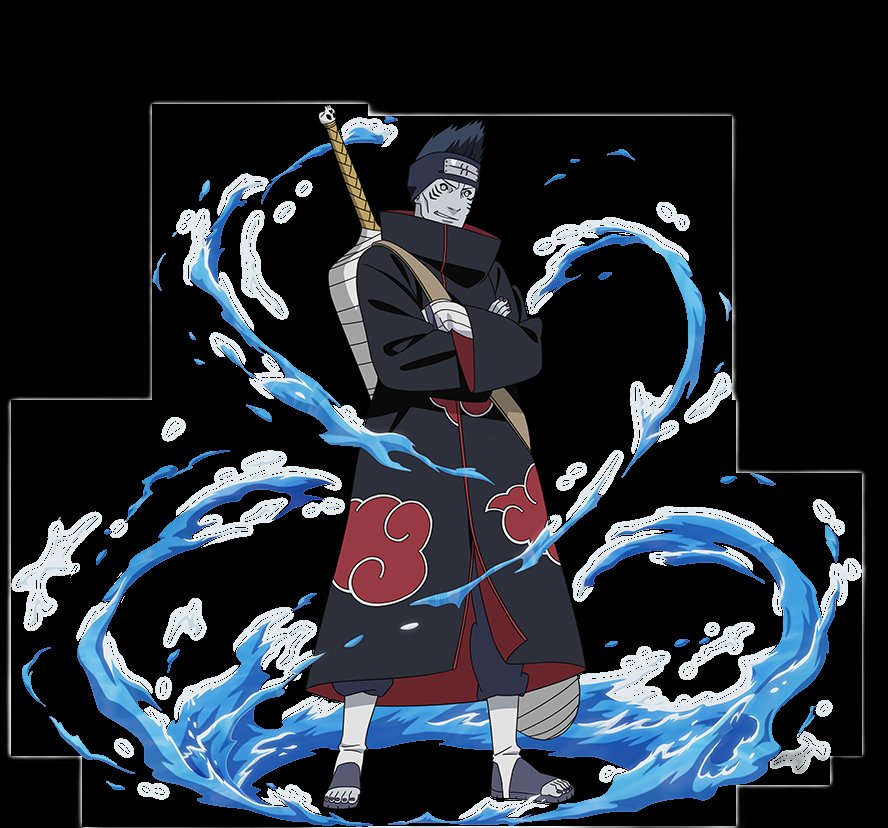
Kirigakure's contribution to the Akatsuki organization was significant, though unintentional. Two of the Akatsuki's most powerful members Kisame Hoshigaki and Zabuza Momochi were former Kirigakure shinobi. Kisame, a former member of the Seven Ninja Swordsmen, brought Samehada and immense Water Release power to the organization. Zabuza, though he died early in the series before the Akatsuki's full strength was revealed, was recruited by the organization and influenced its early operations. The fact that two of the most feared missing-nin in the world came from Kirigakure reinforced the village's reputation as a breeding ground for powerful but dangerous shinobi.
The Fourth Great Ninja War marked Kirigakure's emergence as a responsible international actor. Under Mei Terumi, the village committed significant forces to the Allied Shinobi Forces, with Mei herself serving as one of the five Kage leaders. During the war, Kirigakure's shinobi fought bravely against the reanimated shinobi army and against Madara Uchiha. Mei's Lava Release and Boil Release techniques proved valuable against Madara's Susanoo, and Chojuro fought prominently despite his youth. The village's participation in the war was crucial in demonstrating its transformation and earning the trust of other nations.
In the Boruto era, Kirigakure under Chojuro has become one of the most progressive hidden villages. The former Bloody Mist is now known for its skilled diplomats, contributions to international peacekeeping, and commitment to human rights in shinobi training. Chojuro's gentle leadership style contrasts sharply with the village's brutal past, symbolizing how far Kirigakure has come. The village maintains its renowned sword-fighting traditions and Water Release techniques but now uses them in the service of peace rather than terror. Kirigakure's story of redemption serves as an inspiring example within the Naruto universe of how even the darkest institutions can transform.
Frequently Asked Questions
Who founded Kirigakure?
Kirigakure was founded by the First Mizukage, Byakuren, who unified the water-using shinobi clans of the Land of Water following the Warring States Period. The village was established on a series of islands and coastal areas, naturally suited to Water Release techniques and naval combat.
What was the Bloody Mist?
The Bloody Mist refers to Kirigakure's infamous graduation examination system, where academy students were forced to fight to the death against each other to graduate. Only one student per class would survive, earning the right to become a full shinobi. This brutal practice created a culture of fear and suspicion. Zabuza Momochi became infamous for killing his entire graduating class single-handedly. The practice was eventually abolished under the Fifth Mizukage, Mei Terumi.
Who are the Seven Ninja Swordsmen of the Mist?
The Seven Ninja Swordsmen of the Mist are an elite group of seven shinobi who wield legendary swords unique to Kirigakure. The group includes Zabuza Momochi (Executioner's Blade), Kisame Hoshigaki (Samehada), Mangetsu Hozuki (all seven swords), and others. Each sword has unique properties, and wielding one is considered the highest honor in Kirigakure's military. The group's influence has declined over time as members defected or were killed.
How did Yagura's rule affect Kirigakure?
Yagura, the Fourth Mizukage, ruled Kirigakure for many years under the genjutsu control of Obito Uchiha. During this period, Kirigakure became increasingly isolated and paranoid. The village withdrew from international affairs, the Bloody Mist system continued unchecked, and those who tried to leave were hunted as missing-nin. After Yagura's death, Mei Terumi took over and discovered the extent of the manipulation, which explained years of inexplicable policies.
How did Kirigakure reform under Mei Terumi?
Mei Terumi, the Fifth Mizukage, transformed Kirigakure from a closed, brutal dictatorship into an open and cooperative member of the shinobi world. She abolished the Bloody Mist graduation system, reopened diplomatic relations with other hidden villages, and joined the Allied Shinobi Forces during the Fourth Great Ninja War. Under her leadership, Kirigakure became known for its skilled diplomats and contributed significantly to post-war reconstruction. Chojuro continued her reforms as the Sixth Mizukage.