Overview
Iwagakure, meaning "Village Hidden in the Stones," is the hidden village of the Land of Earth, one of the Five Great Shinobi Villages. Located in a region of rocky mountains and canyons, Iwagakure's architecture is carved directly into the stone cliffs, creating a fortress-like appearance that reflects the village's defensive military philosophy. As the village of the Tsuchikage, Iwagakure commands immense military respect across the shinobi world, particularly for its mastery of Earth Release jutsu and its unique Dust Release Kekkei Tota.
The village is organized around the Tsuchikage's administrative center, with residential and training districts built into the surrounding mountain faces. Iwagakure's economy relies on mission income, mining operations, and trade routes through the mountainous Land of Earth. The village maintains a large standing army of shinobi specializing in earth-based techniques, including the Explosion Corps, a specialized unit that uses clay-based explosive jutsu. Deidara was one of the most infamous members of this corps before defecting to the Akatsuki.
Throughout the Naruto series, Iwagakure plays a significant role as a military rival to Konohagakure. The village fought in all three Great Ninja Wars, with particularly intense conflict against Konoha during the Third Great Ninja War. Under the leadership of the Third Tsuchikage Onoki, Iwagakure initially aligned with the Akatsuki's plans during the early stages of the Fourth Great Ninja War before joining the Allied Shinobi Forces. The village's signature techniques, including the massive Stone Golem jutsu and Particle Style, make it a formidable military power in the Naruto world.
History & Founding
Iwagakure was established as one of the first hidden villages during the founding era following the Warring States Period, alongside Konohagakure, Sunagakure, Kumogakure, and Kirigakure. The First Tsuchikage, Ishikawa, unified the earth-using shinobi clans of the Land of Earth under a single banner, creating a village built into the mountainous terrain that naturally defended against invasion. The village's founders established the Tsuchikage system of hereditary succession, with the title passing from Ishikawa to his student Mu, the Second Tsuchikage.
The Second Tsuchikage, Mu, was a legendary shinobi who developed Dust Release, a Kekkei Tota that combines Earth, Fire, and Wind Release to create a technique that disintegrates targets at the molecular level. Mu's mastery of this technique earned him the nickname "The Non-Person" because he could erase his presence so completely that sensors could not detect him. During the First Great Ninja War, Mu clashed with the Second Mizukage and both were believed to have killed each other in combat, though Mu's soul was later reanimated during the Fourth Great Ninja War using Edo Tensei.
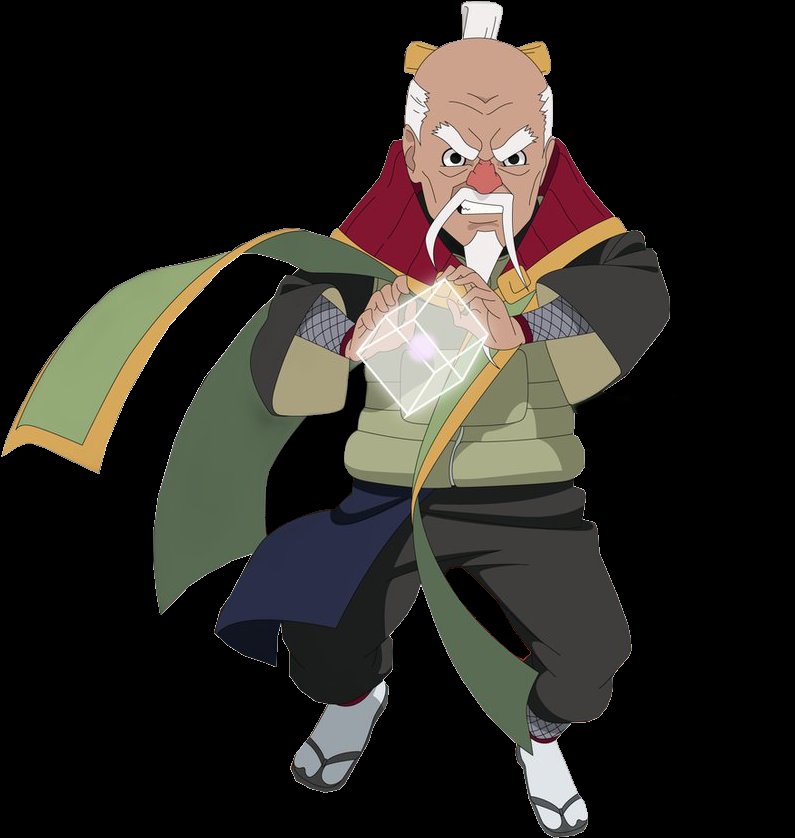
The Third Tsuchikage, Onoki, was Mu's student who inherited both his position and his Dust Release ability. Onoki led Iwagakure through the longest period of its history, spanning the Second and Third Great Ninja Wars and into the modern era. Under Onoki, Iwagakure developed a reputation for aggressive military expansion, frequently clashing with Konohagakure over territory. The Third Great Ninja War saw some of the most brutal fighting between Iwa and Konoha, including the Kannabi Bridge incident where Kakashi's squad destroyed a key supply bridge, turning the tide of the war against Iwagakure.
After Onoki's resignation following the Fourth Great Ninja War, his granddaughter Kurotsuchi became the Fourth Tsuchikage, ushering in an era of reform and reconciliation. Kurotsuchi adopted a more diplomatic foreign policy, strengthening ties with the other hidden villages, particularly Konohagakure and Sunagakure. She participated in the regular Kage summits and committed Iwagakure to the Allied Shinobi Forces' peacetime framework, making the transition from a militaristic to a cooperative power in the shinobi world.
Leadership & Government
Iwagakure's government is centered on the Tsuchikage, the village's supreme military and political leader. Unlike Konoha's selection process involving a Jounin Council, Iwagakure's Tsuchikage succession historically followed a master-student lineage, with each Tsuchikage personally training and designating their successor. The four Tsuchikage in order are Ishikawa (First), Mu (Second), Onoki (Third), and Kurotsuchi (Fourth). Onoki's exceptionally long tenure was due to his ability to reduce his body's weight and fly, which slowed his aging process, allowing him to serve for decades beyond a normal lifespan.
The Tsuchikage is advised by a council of senior shinobi and clan representatives. Key advisors during Onoki's tenure included his personal bodyguard Akatsuchi, a massive shinobi with Earth Release mastery, and Kurotsuchi herself before she succeeded him. The village maintains a military structure similar to other hidden villages, with ANBU-like black ops units for intelligence gathering and special operations. However, Iwagakure places greater emphasis on large-scale military formations and defensive tactics, reflecting its fortress-based strategy.
Iwagakure's Explosion Corps is a unique specialized unit that deserves particular mention. This elite division consists of shinobi who use clay infused with their chakra to create explosive devices of various shapes and sizes. Deidara was the most gifted member of this corps, possessing a natural affinity for clay manipulation that allowed him to create microscopic bombs that could infiltrate targets undetected. The Explosion Corps serves as both a special operations unit and a deterrent force, capable of devastating area-denial attacks that make invading Iwagakure's mountain terrain extremely costly.
The village's foreign policy under Onoki was characterized by pragmatic neutrality with aggressive undertones. Iwagakure maintained a careful balance between the other great nations, often switching allegiances based on strategic advantage. This approach sometimes made Iwa an unreliable ally, as seen when they secretly supported the Akatsuki's early operations while publicly denying involvement. Under Kurotsuchi, this policy shifted toward genuine cooperation, and Iwagakure became a reliable partner in the post-war international order, contributing forces to joint peacekeeping missions and participating in economic cooperation agreements.
Notable Landmarks
The Tsuchikage's Office is the administrative heart of Iwagakure, carved into the largest stone face in the village's central district. Unlike Konoha's Hokage Mountain with its carved faces, Iwagakure's government buildings are integrated into the natural rock formations, with multiple levels connected by stone staircases and tunnels. The main office features a panoramic view of the surrounding mountain ranges, serving as a strategic observation post. Onoki was famous for conducting meetings while hovering outside his office window, using his Light-Weight Rock technique to float.
The Stone Training Grounds are Iwagakure's primary training facilities, consisting of multiple levels of rocky terrain designed to simulate combat conditions in mountainous environments. These grounds include special areas for practicing Earth Release techniques, with reinforced stone walls that can withstand high-level jutsus. Trainees learn to mold the terrain to their advantage, creating earth walls, rock golems, and defensive fortifications. The most advanced training area contains a deep canyon where shinobi practice techniques requiring vertical mobility and terrain manipulation.
The Explosion Corps Headquarters is a heavily fortified compound on the outskirts of the village where clay-based explosive techniques are developed and tested. The facility includes soundproofed chambers for practicing detonation techniques, clay processing workshops, and secure storage for explosive materials. Deidara spent much of his early career in this facility, refining his artistic approach to explosion-based combat before his defection. The surrounding area shows visible scarring from years of explosive testing, creating a lunar-like landscape that serves as a warning to potential invaders.
The Kannabi Bridge, while not within Iwagakure itself, is a strategically vital structure associated with the village. Located in the Land of Earth, this bridge served as a critical supply line during the Third Great Ninja War. Its destruction by Kakashi Hatake, Obito Uchiha, and Rin Nohara was a turning point in the war, cutting off Iwagakure's supply routes and forcing their retreat. The bridge's name appears in one of the most tragic events in Naruto history, as Obito's apparent death during this mission set in motion events that would shape the entire shinobi world.
Role in the Shinobi World
Iwagakure's military reputation precedes it among the Five Great Shinobi Villages. The village's mastery of Earth Release gives it significant advantages in defensive warfare, and its mountainous terrain makes direct invasion nearly impossible. During the three Great Ninja Wars, Iwagakure fought primarily against Konohagakure and Kumogakure, holding its own against both despite being strategically located between these two powerful villages. The village's Stone Golem jutsu and Earth Dragon Bomb techniques are feared across the shinobi world for their destructive power.
Iwagakure's relationship with the Akatsuki organization is complex and controversial. The village initially denied any connection to the criminal organization, but it was later revealed that Iwagakure had secretly supported the Akatsuki's early activities, viewing the group as a useful tool for destabilizing rival villages. Onoki's pragmatic approach allowed Akatsuki to operate in the Land of Earth's sphere of influence, and at least two of Iwa's shinobi Deidara and Jinin Akebino joined the organization. This policy backfired when the Akatsuki became powerful enough to threaten even the great villages directly.
The Fourth Great Ninja War represented a turning point for Iwagakure. After initially hesitating to join the Allied Shinobi Forces, Onoki committed Iwa's full military strength to the alliance. During the war, Onoki played a crucial role in the battle against Madara Uchiha, using his Dust Release to destroy Madara's Susanoo and protecting the alliance's leaders. Onoki nearly died from exhaustion but was revived by Tsunade and the other Kage. His granddaughter Kurotsuchi also fought bravely in the war, establishing her credentials as a future leader.
In the Boruto era, Iwagakure under Kurotsuchi has become a progressive force in the shinobi world. She has implemented modernizing reforms, opened trade agreements with other villages, and participated in the Scientific Ninja Tool development program. Iwagakure has also taken a leading role in combating the Otsutsuki threat, recognizing that only united action can protect the planet. The village maintains a strong military but now uses its power primarily for peacekeeping and disaster relief, reflecting the transformed geopolitical landscape of the post-Naruto era.
Frequently Asked Questions
Who founded Iwagakure?
Iwagakure was founded by the First Tsuchikage, Ishikawa, who unified the earth-based shinobi clans of the Land of Earth after the Warring States Period. The village was built into the mountainous terrain of the Land of Earth, and Ishikawa established the Tsuchikage system of succession. His student Mu succeeded him as the Second Tsuchikage after Ishikawa's passing.
What is Dust Release (Particle Style)?
Dust Release, also known as Particle Style, is a Kekkei Tota that combines Earth, Fire, and Wind Release natures. Unlike Kekkei Genkai which combines two natures, Kekkei Tota combines three, making it extremely rare. Dust Release creates a cubic or conical barrier that disintegrates anything inside at the molecular level. Only the Second Tsuchikage Mu and the Third Tsuchikage Onoki were known to possess this ability, making it one of the rarest and most powerful techniques in the Naruto world.
Who are the notable Tsuchikage of Iwagakure?
The four known Tsuchikage are: Ishikawa (First), who founded the village; Mu (Second), creator of Dust Release and known as "The Non-Person" for his presence-erasing ability; Onoki (Third), the longest-serving Tsuchikage who mastered Dust Release and led Iwa through three Great Ninja Wars; and Kurotsuchi (Fourth), Onoki's granddaughter who modernized the village after the Fourth Great Ninja War. Onoki is the most prominent due to his exceptionally long tenure and his personal rivalry with the Third Raikage.
What happened to Deidara and Iwagakure?
Deidara was a prodigy of Iwagakure's Explosion Corps who used clay-based explosive techniques. Frustrated with the village's restrictions on his artistic expression and his forced recruitment into the Akatsuki, Deidara eventually defected and became a full member of the organization. He was partnered with Sasori and later Tobi (Obito Uchiha). Deidara was killed in battle against Sasuke Uchiha, choosing to self-destruct rather than be captured. His defection was a significant embarrassment to Iwagakure's leadership.
How did Iwagakure fare in the Fourth Great Ninja War?
Iwagakure initially hesitated to join the Allied Shinobi Forces, with Onoki skeptical of Konoha's leadership. However, after Naruto Uzumaki convinced him of the importance of unity, Onoki committed Iwa's full forces to the alliance. During the war, Onoki played a decisive role against Madara Uchiha, using Dust Release to destroy his Susanoo and protect the Kage. Kurotsuchi also fought prominently. Onoki nearly died from chakra exhaustion but was saved by Tsunade. After the war, Kurotsuchi succeeded him and led Iwagakure into an era of peace and reform.