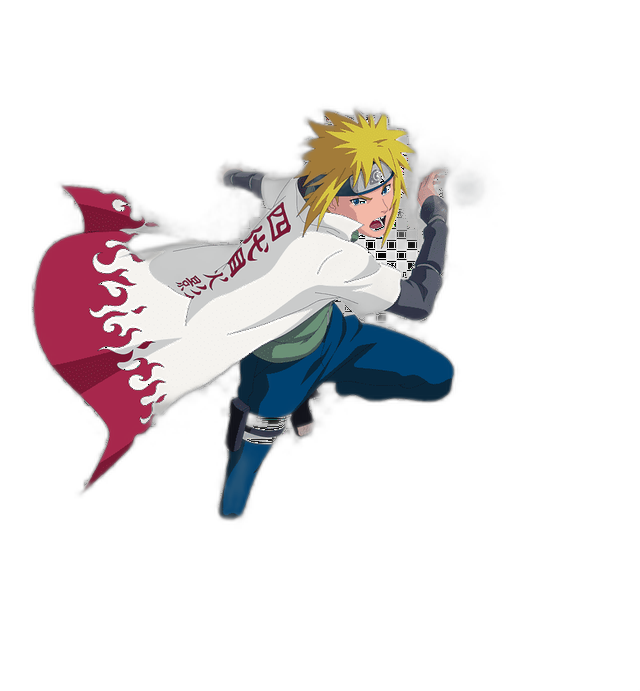
What Is the Rasengan?
The Rasengan is a powerful A-rank technique created by Minato Namikaze, the Fourth Hokage, over a three-year period. Inspired by observing the Tailed Beast Ball used by Kurama and other tailed beasts, Minato designed the Rasengan as a concentrated sphere of chakra that spins at tremendous velocity, grinding into anything it contacts. Unlike most jutsu in the Naruto universe, the Rasengan requires no hand seals to activate, making it one of the fastest and most unpredictable techniques in battle.
Minato's original vision was to craft a technique that could be deployed instantly without the delay of forming hand signs. He succeeded brilliantly, creating a jutsu that exists as a pure form of shape transformation — the manipulation of chakra's form without adding any nature affinity. This makes the Rasengan fundamentally different from elemental techniques like the Chidori, which relies on Lightning Release nature transformation for its piercing effect.
The technique was later passed down to Jiraiya, who witnessed Minato's work during the Third Great Ninja War. Jiraiya, in turn, taught the Rasengan to Naruto Uzumaki during their training journey to find Tsunade. Naruto's famous three-step training method — starting with a water balloon (mastering rotation), moving to a rubber ball (mastering containment), and finally creating a complete Rasengan — has become one of the most memorable training sequences in the Naruto series, spanning anime episodes 86 through 88.
How the Rasengan Works
The Rasengan operates on three simultaneous chakra manipulation principles: shape transformation, rotation, and containment. The user must generate a steady stream of chakra, spin it in multiple directions at once within their palm, and contain the resulting force within a spherical boundary. Mastering all three components simultaneously is what makes the Rasengan so difficult to learn — most shinobi never achieve it regardless of talent.
The shape transformation involved is extraordinarily complex. Unlike techniques that simply release chakra outward, the Rasengan's chakra rotates in multiple axes at once, creating a spherical vortex. This multidirectional rotation generates immense centrifugal force, which gives the Rasengan its signature drilling property. When the sphere makes contact with a target, the spinning chakra grinds, crushes, and shreds rather than simply pushing or burning. The resulting damage is both external and internal, as the chakra vortex disrupts the target's own chakra network upon deep contact.
A key distinction from techniques like Kakashi's Chidori is that the Rasengan lacks nature transformation. The Chidori adds Lightning Release to shape transformation, giving it piercing and paralyzing properties. The Rasengan's raw power comes purely from its masterful shape transformation — the denser and faster the chakra spins, the more devastating the impact. This design choice is both a strength and a limitation: the base Rasengan cannot exploit elemental weaknesses, but it also cannot be countered by elemental immunity as easily as nature-based techniques.
When Naruto first began learning the Rasengan, he struggled with the containment aspect, often popping the water balloon and rubber ball prematurely. His breakthrough came when he used a Shadow Clone to assist — one clone would handle the rotation while Naruto himself focused on containment. This multi-person approach became Naruto's signature method for performing more advanced Rasengan variants throughout the series, allowing him to create techniques of unprecedented scale and complexity.
Types and Variants
The Rasengan has evolved into numerous variants across the Naruto and Boruto series, each adding unique properties or enhancements to the original design. The most significant variants demonstrate the technique's remarkable adaptability as a foundation for innovation.
Odama Rasengan (Big Ball Rasengan). Naruto's first major upgrade, created by using Shadow Clones to form a Rasengan nearly ten times the standard size. He first used this variant against Kabuto Yakushi during the search for Tsunade (episode 95), forcing Kabuto to abandon his medical ninjutsu focus and flee the battle. The Odama Rasengan sacrifices precision for raw destructive area, making it ideal against large targets or groups.
Rasenshuriken. The most famous variant, developed by Naruto during his training with Kakashi and Yamato before the Kazekage Rescue Arc. Naruto added Wind Release nature transformation to the Rasengan, creating four jagged blades of wind chakra that spin around the central sphere. At the cellular level, the Rasenshuriken damages the target's chakra network, causing injuries that are nearly impossible to heal. Naruto first used it against Kakuzu during the Hidan and Kakuzu Arc (Shippuden episode 85), completely destroying the Akatsuki member's body despite his multiple hearts. The technique initially damaged Naruto's own arm due to the recoil, a limitation he later overcame with Sage Mode.
Vanishing Rasengan (Invisible Rasengan). Boruto Uzumaki's signature variant, introduced in Boruto: Naruto the Movie (2015) and the Boruto anime series. Unlike other Rasengan variants, the Vanishing Rasengan incorporates Lightning Release, causing it to become invisible after being thrown. This unique property makes it extremely difficult for opponents to track and dodge. Boruto's mastery of this technique stems from his natural affinity for both Wind and Lightning Release chakra, inherited from his parents.
Planetary Rasengan. Naruto creates multiple small Rasengan spheres and sends them orbiting around a larger central Rasengan, resembling a planetary system. This variant was demonstrated during Naruto's training with Killer Bee on the Turtle Island, showcasing advanced chakra control and multitasking ability that few shinobi could ever hope to match.
Super Mini-Tailed Beast Ball. After befriending Kurama, Naruto learned to create Rasengan-like spheres infused with Kurama's chakra, effectively a hybrid between the Rasengan and the Tailed Beast Ball. This variant combines the precision of the Rasengan with the devastating area-of-effect power of a Biju's signature attack, and Naruto used it extensively during the Fourth Great Ninja War.
Rasengan: Unison. A cooperative variant developed by Konohamaru Sarutobi, where two users simultaneously form a Rasengan and merge them at the point of impact for amplified effect. Konohamaru and Naruto used this variant against the Pain invasion (Shippuden episode 167), creating a combined explosion that overwhelmed one of the Six Paths of Pain.
Notable Users
Minato Namikaze. The creator and original master of the Rasengan. Minato designed the technique during the Third Great Ninja War, spending three years perfecting the chakra rotation mechanism. His speed in forming and deploying the Rasengan was legendary — he could create one in an instant and deliver it while teleporting via the Flying Thunder God Technique. Minato used the Rasengan in several key battles, most notably against Obito Uchiha during the Nine-Tailed Fox attack on Konoha (manga chapters 503-504), where he struck Obito with a perfectly placed Rasengan to the back.
Jiraiya. The Toad Sage learned the Rasengan from Minato and later passed it to Naruto. Jiraiya demonstrated mastery of a larger variant, the Big Ball Rasengan, which he used effectively against Pain's summons and later against the Six Paths of Pain himself. His fight against Pain (manga chapters 369-383) remains one of the series' most dramatic showcases of Rasengan combat against regeneration-capable opponents, as Jiraiya combined the technique with Sage Mode and toad summoning strategies.
Naruto Uzumaki. The most prolific user and innovator of the Rasengan. Naruto not only mastered the original form but developed more variants of the technique than any other shinobi in history. His signature battles featuring the Rasengan include: against Kabuto (first successful standard Rasengan, episode 95), against Sasuke at the Valley of the End (Odama Rasengan versus Chidori, episode 133), against Kakuzu (first Rasenshuriken, Shippuden episode 85), against Pain (Frog-Kumite-enhanced Sage Mode Rasengan, Shippuden episode 167), and the final Valley of the End rematch against Sasuke (dual Giant Rasengan, Shippuden episodes 476-477).
Kakashi Hatake. Having witnessed Minato's original technique during their time on the same team, Kakashi learned the Rasengan by observation, though he never achieved the same level of mastery as Minato, Jiraiya, or Naruto. Kakashi acknowledged that his copy-ninja abilities gave him the theoretical understanding, but his natural affinity for Lightning Release meant the Chidori remained his signature technique. He nonetheless understood the Rasengan's mechanics well enough to teach the principles to Naruto during his early training.
Konohamaru Sarutobi. The grandson of the Third Hokage learned the Rasengan from Naruto and achieved full mastery, including the ability to create the Odama Rasengan. During the Pain invasion, Konohamaru famously defeated one of the Six Paths of Pain using his Rasengan — a defining moment that proved the technique's effectiveness even against opponents with godlike abilities. He later developed the Rasengan: Unison in collaboration with Naruto, further extending the technique's cooperative applications.
Boruto Uzumaki. Naruto's son learned the Rasengan and added a Lightning Release variation, creating the Vanishing Rasengan. Boruto's version is notable for being invisible and throwable, characteristics that neither the original nor any other known variant possessed. He used it to defeat Momoshiki Otsutsuki in Boruto: Naruto the Movie, marking the first time a new Rasengan variant was the decisive factor in defeating an Otsutsuki-level threat.
Strengths and Weaknesses
Strengths. The Rasengan's greatest advantage is its zero hand seal requirement, allowing the user to deploy it instantly in combat. This makes it exceptionally effective for surprise attacks and for users who excel at close-range combat. Unlike jutsu that require extensive preparation or obvious setup, the Rasengan can be formed as the user approaches the target, hiding the technique until the moment of impact.
The technique's modular design is another major strength. Because the Rasengan is pure shape transformation without a fixed nature affinity, it can be layered with elemental chakra — Wind, Lightning, Fire, Water, Earth, or even Yin-Yang Release — to create specialized variants for any combat scenario. Additionally, the Rasengan can be combined with Sage Mode chakra (enhancing its power and adding sensory capabilities), Kurama's chakra (amplifying scale and destructive force), or Six Paths Sage power for exponentially greater effect.
The Rasengan also serves as a foundation technique that can be thrown, embedded in weapons, layered with Tailed Beast chakra, or used in conjunction with Shadow Clones for massive coordinated attacks. Its versatility has made it the most-evolved technique in the Naruto universe, with more named variants than any other jutsu in the series.
Weaknesses. Despite its power, the base Rasengan has notable limitations. The most significant is the difficulty of mastery — most shinobi cannot learn the technique even with years of dedicated training. The three-component chakra manipulation requirement (rotation, shape, containment) demands exceptional chakra control that few possess naturally. Without nature transformation, the base Rasengan cannot exploit elemental weaknesses. Against opponents with chakra absorption abilities, such as Pain's Preta Path or Kisame's Samehada, a standard Rasengan can be neutralized before it makes contact.
Extended use of the Rasengan causes significant chakra depletion, especially for larger variants. Naruto, with his enormous chakra reserves as a jinchuriki and later as Kurama's partner, could absorb this cost, but ordinary users are limited to one or two large-scale Rasengan uses per battle. The technique is also primarily a close-range attack, requiring the user to get within striking distance — a weakness that more mobile or long-range opponents can exploit effectively.
Frequently Asked Questions
Who created the Rasengan?
The Rasengan was created by Minato Namikaze, the Fourth Hokage of Konohagakure. He developed the technique over three years after being inspired by the Tailed Beast Ball used by Kurama. Minato designed it as a hand-seal-less technique that could be deployed instantly in battle, making it a perfect complement to his Flying Thunder God Technique for swift, decisive strikes.
Why does the Rasengan require no hand seals?
Minato designed the Rasengan specifically to eliminate the delay caused by forming hand signs. Because it relies entirely on shape transformation — manipulating chakra's form through sheer chakra control — rather than nature transformation, it bypasses the need for hand seals entirely. This allows the user to create and deploy the Rasengan in an instant, a crucial advantage in high-speed combat where every fraction of a second matters.
How is the Rasengan different from the Chidori?
The Rasengan and Chidori are fundamentally different despite being the two most iconic techniques in Naruto. The Rasengan is pure shape transformation without elemental nature, while the Chidori adds Lightning Release nature transformation to shape transformation. The Rasengan grinds and crushes upon impact, whereas the Chidori pierces and conducts electricity. The Chidori requires hand seals to activate, while the Rasengan does not. In their final battle, Naruto's Giant Rasengan and Sasuke's Indra's Arrow represented the ultimate evolution of both techniques, demonstrating the thematic contrast between raw power and precise technique.
What is the Rasenshuriken?
The Rasenshuriken is Naruto's first major evolution of the Rasengan, created by adding Wind Release nature transformation to the base technique. This creates four large blades of wind chakra that rotate around a central Rasengan core, forming a shuriken-like shape. Unlike the standard Rasengan, the Rasenshuriken damages the target at the cellular level, attacking their chakra network and causing injuries that are exceptionally difficult to heal, as demonstrated in Naruto's battle against Kakuzu in Shippuden episode 85.
Who has the strongest Rasengan?
The strongest Rasengan variant ever demonstrated is Naruto's Six Paths: Ultra-Big Ball Rasenshuriken, created using Six Paths Sage Mode chakra during the Fourth Great Ninja War. This variant was used against Kaguya Otsutsuki and Madara Uchiha. It combines the raw power of Six Paths Sage chakra with the precision damage of the Rasenshuriken, making it capable of harming even dimension-hopping Otsutsuki clan members. Boruto's Vanishing Rasengan, while less powerful in raw force, is arguably the most tactically sophisticated variant due to its invisibility and ranged throwing capability.
External Sources
For readers interested in deeper exploration of the Rasengan, the following external resources provide comprehensive information about the technique's lore, appearances, and cultural impact:
- Rasengan — Wikipedia — General overview of the technique's role in the Naruto series and its cultural impact in anime.
- Rasengan — Naruto Fandom Wiki — Detailed technical breakdown of all Rasengan variants, including manga chapter references and anime episode appearances.
- Naruto — MyAnimeList — Official series page with episode guides, character profiles, and community ratings for the original Naruto anime.