What Are Forbidden Jutsu?
Forbidden Jutsu, known in Japanese as kinjutsu, are techniques deemed too dangerous, unethical, or potentially destructive for standard shinobi use. Each of the Five Great Shinobi Villages maintains its own classification system for forbidden techniques, but the general criteria remain consistent across nations. A technique earns the kinjutsu classification when its use poses significant risk to the user, bystanders, or society as a whole — regardless of how powerful or effective the technique may be in combat.
The concept of forbidden jutsu is central to the Naruto series' moral framework. The existence of these techniques raises questions about the limits of shinobi power, the ethics of warfare, and the price of victory. Characters who use forbidden jutsu are often portrayed as tragic figures willing to sacrifice everything — including their own humanity — for their goals. The most famous example is the Edo Tensei (Impure World Reincarnation), which defies death itself and forces the souls of the deceased to fight against their will, violating the most fundamental taboos in the shinobi world.
Forbidden jutsu are typically recorded in sealed scrolls and kept under strict guard in village libraries. Only the Hokage or village leader has the authority to permit access to these scrolls. However, throughout the series, many forbidden techniques have been stolen, copied, or independently rediscovered by rogue shinobi and enemy organizations. The Akatsuki, in particular, built their entire operational strategy around the use of multiple forbidden techniques, including the Edo Tensei and the Outer Path: Samsara of Heavenly Life Technique used by Nagato to resurrect the Konoha villagers killed during Pain's invasion.
Classification and Criteria
The classification of a technique as forbidden follows several established criteria, and a technique may be classified for meeting any one of these conditions. Understanding these criteria helps explain why certain powerful techniques are restricted while equally powerful techniques remain freely taught.
User Self-Harm. The most common reason for a technique to be forbidden is that it causes irreversible damage to the user. The Eight Gates Released Formation is the clearest example — each opened gate multiplies the user's physical power but inflicts cumulative damage on the body. Opening the Eighth Gate of Death guarantees the user's death after a brief burst of immense power. Similarly, the Dead Demon Consuming Seal (Shiki Fujin) requires the user to sacrifice their own soul to seal an opponent, killing the user in the process. These techniques are forbidden not because they are ineffective, but because they are ultimately suicidal.
Collateral Damage. Some techniques are forbidden because they pose unacceptable risk to bystanders and the environment. The C0: Self-Destruct technique used by Deidara creates an explosion with a radius of approximately 10 kilometers, killing everyone within range regardless of affiliation. Techniques of this scale cannot be used in any populated area without causing mass civilian casualties. The Hidan's ritual curse technique (Jashin's power) also falls into this category, as it requires innocent sacrifices to activate.
Ethical Violations. The most serious classification involves techniques that violate fundamental ethical principles of the shinobi world. Edo Tensei forces deceased souls to fight against their will, desecrating the dead and causing psychological trauma to those who must fight their former comrades. The Yamanaka Clan's Mind Transfer Technique can be used for non-consensual mind control. Genetic manipulation techniques, such as those used to create Mitsuki as an artificially enhanced shinobi, challenge the very definition of human life and are classified as forbidden in most villages.
Uncontrollable Power. Some techniques are forbidden simply because they are too dangerous to control. The Ten-Tails' power, if improperly sealed, can destroy an entire nation. Jinchuriki who lose control of their tailed beasts can cause devastation on a catastrophic scale. The Reanimation Jutsu used by Nagato to revive thousands of Konoha citizens cost Nagato his life — the technique's chakra requirements exceeded even his immense reserves as an Uzumaki with the Rinnegan.
Major Forbidden Techniques
The Naruto series features numerous forbidden techniques that play pivotal roles in the storyline. These techniques are often the deciding factor in major conflicts, and their impact on the plot cannot be overstated.
Edo Tensei (Impure World Reincarnation). Created by the Second Togakure, Tobirama Senju, and later perfected by Orochimaru and Kabuto Yakushi, this technique resurrects the dead by binding their souls to living vessels. The resurrected shinobi retain their original abilities and personalities but are forced to obey the summoner's commands. During the Fourth Great Ninja War, Kabuto resurrected dozens of legendary shinobi including all previous Hokage, Itachi Uchiha, Nagato, and the Gold and Silver Brothers. The technique was only fully neutralized when Itachi used his Kotoamatsukami to free himself from Kabuto's control and then used the Izanami to force Kabuto to release the technique entirely (manga chapters 575-590).
Dead Demon Consuming Seal (Shiki Fujin). A sealing technique that summons the Shinigami (Death God) to consume the souls of both the target and the user. The user's soul is trapped in the Shinigami's stomach for eternity, fighting alongside the Death God. The Third Hokage, Hiruzen Sarutobi, used this technique during the Konoha Crush arc (episode 80) to seal the souls of the First and Second Hokage (who were resurrected by Orochimaru's Edo Tensei) and to seal Orochimaru's arms, rendering him unable to use jutsu for years. Later, Minato Namikaze had used the same technique to seal the Nine-Tailed Fox's Yin half into himself during the attack on Konoha (manga chapters 503-504).
Shadow Clone Jutsu (Kage Bunshin no Jutsu). While the basic Clone Jutsu is a standard Academy technique taught to all students, the Shadow Clone variant is classified as a forbidden jutsu because it divides the user's chakra equally among all clones. For most shinobi, creating multiple shadow clones would drain their chakra reserves to fatal levels. The technique was classified as kinjutsu because of this risk, though Naruto Uzumaki's enormous chakra reserves as a jinchuriki made it his signature technique with no practical downside. The technique's secondary property — transferring the clones' experiences back to the user upon dispelling — makes it one of the most powerful training tools in the Naruto universe.
Eight Gates Released Formation. A taijutsu technique that removes the body's natural limiters to unlock tremendous physical power. The eight gates are chakra points along the meridian system that normally restrict chakra flow to prevent self-damage. Opening each gate progressively increases the user's power but causes cumulative damage to the body. Opening the Eighth Gate, the Gate of Death, provides power surpassing even the Five Kage but guarantees the user's death. Might Guy used this against Madara Uchiha during the Fourth Great Ninja War (Shippuden episodes 418-420), achieving power that Madara called "the strongest taijutsu user I have ever faced."
Creation of All Things (Yin-Yang Release). A god-level technique used by Hagoromo Otsutsuki to create the Nine Tailed Beasts by dividing the Ten-Tails' chakra. This technique combines Yin Release (creating form from nothingness) with Yang Release (breathing life into form) to create physical, living entities from pure chakra. Hagoromo granted Naruto and Sasuke this ability during their encounter at the end of the Fourth Great Ninja War (manga chapter 671), allowing Naruto to restore Kakashi's lost eye and save Guy from the Eight Gates' fatal aftermath.
Notable Users of Forbidden Jutsu
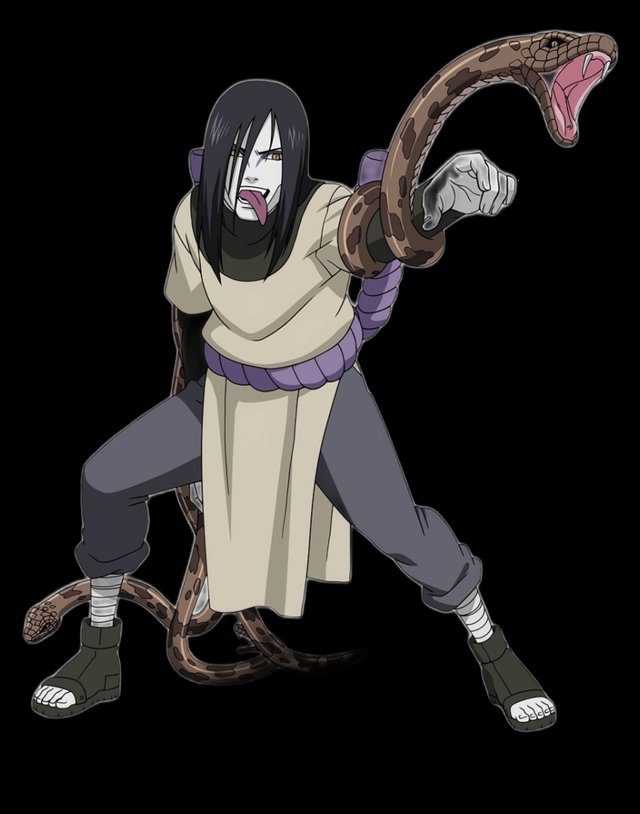
Orochimaru. The most prolific user and researcher of forbidden jutsu in the Naruto series. Orochimaru's obsession with immortality led him to develop numerous forbidden techniques, including the Living Corpse Reincarnation (body-switching), cursed seals that modify human physiology, and genetic experimentation to create enhanced shinobi. His research into Edo Tensei allowed Kabuto to later perfect the technique and use it during the Fourth Great Ninja War. Orochimaru's unorthodox methods made him a rogue ninja hunted by Konoha, but his contributions to forbidden jutsu research remained unmatched throughout the series.
Kabuto Yakushi. Orochimaru's right hand and later a major antagonist in his own right. Kabuto surpassed Orochimaru by integrating Orochimaru's remains into his own body and mastering Sage Mode in the Ryuchi Cave. His most significant feat was perfecting the Edo Tensei during the Fourth Great Ninja War, resurrecting dozens of legendary shinobi simultaneously and maintaining control over them — a feat that even Orochimaru had never achieved. Kabuto's application of forbidden techniques demonstrated that combining multiple forbidden jutsu could create synergistic effects far greater than any single technique.
Naruto Uzumaki. While Naruto primarily uses the Shadow Clone Jutsu (a classified forbidden technique), his relationship with forbidden jutsu is unique. Because of his enormous chakra reserves, the Shadow Clone's chakra-draining property poses no threat to him, effectively making the technique safe for his use. Naruto's use of the Shadow Clone extends far beyond combat — he uses it for training (the famous waterfall training arc), for information gathering, for experience transfer, and for one of the most impressive displays of forbidden jutsu in the series: creating thousands of shadow clones during the fight against Pain (Shippuden episode 167).
Might Guy. The most dramatic example of a forbidden jutsu used for heroic sacrifice. Guy opened the Seventh Gate against Kisame Hoshigaki (Shippuden episode 256) and later opened all Eight Gates against Madara Uchiha (Shippuden episode 420). His Eight Gates Released Formation represented the pinnacle of taijutsu, producing power that warped space itself with each punch. Madara acknowledged Guy as "the strongest taijutsu user" he had ever faced. Only Naruto's intervention with Six Paths Sage power saved Guy from the guaranteed death that follows opening the Eighth Gate.
Nagato Uzumaki. As the wielder of the Rinnegan, Nagato had access to the most forbidden techniques of all — the Six Paths techniques originally used by Hagoromo Otsutsuki. His most significant use of forbidden jutsu was the Outer Path: Samsara of Heavenly Life Technique, which resurrected everyone killed during Pain's invasion of Konoha at the cost of Nagato's own life. This technique alone is arguably the most ethically complex forbidden jutsu in the series: it required sacrificing one life to resurrect thousands, raising questions about the value of individual sacrifice versus collective salvation.
Risks and Consequences
The use of forbidden jutsu rarely comes without severe consequences, and the Naruto series emphasizes this through its narrative. Every major use of a forbidden technique in the series carries costs that ripple far beyond the immediate battle.
Physical Consequences. The most direct cost is physical damage to the user. The Eight Gates causes cumulative bodily harm that can lead to permanent disability or death. The Dead Demon Consuming Seal costs the user's soul. Living Corpse Reincarnation requires Orochimaru to periodically change bodies, each transfer weakening his original soul and chakra identity. These physical costs are not abstract — they are demonstrated visually and narratively throughout the series, reinforcing the message that forbidden power comes at a tangible price.
Psychological Consequences. The trauma of using forbidden techniques often affects users long after the battle ends. Shinobi forced to fight their resurrected comrades through Edo Tensei suffer lasting psychological damage. Kabuto's descent into madness after fusing with Orochimaru's DNA and overusing Sage Mode showed how forbidden techniques can corrode the user's mind. The psychological burden is perhaps heaviest on those who use forbidden jutsu for noble purposes — Hiruzen's sacrifice to seal Orochimaru's arms, Nagato's self-sacrifice to revive Konoha's citizens, and Guy's near-fatal use of the Eight Gates all carry emotional weight that defines these characters' legacies.
Societal Consequences. Forbidden jutsu can destabilize entire societies. The existence of Edo Tensei alone changes the nature of warfare — if any village can resurrect dead shinobi as an army, the traditional balance of power becomes meaningless. During the Fourth Great Ninja War, the Allied Shinobi Forces faced their own fallen comrades, teachers, and family members, creating psychological warfare on an unprecedented scale. The ethical questions raised by forbidden jutsu — Should the dead be left to rest? Is immortality worth the cost? At what point does power become corruption? — form the philosophical backbone of the Naruto series and are never fully resolved.
Frequently Asked Questions
What makes a jutsu forbidden in the Naruto universe?
A jutsu is classified as forbidden when it causes irreversible harm to the user, risks mass collateral damage, violates ethical principles, or presents uncontrollable power. Each village maintains its own classification system but these four criteria are universally recognized. The classification is not about power level but about the cost and risk associated with the technique.
Is the Shadow Clone Jutsu really a forbidden technique?
Yes, the Shadow Clone Jutsu is classified as a forbidden technique because it divides the user's chakra equally among all clones created. For most shinobi, creating multiple shadow clones would deplete their chakra to life-threatening levels. However, Naruto Uzumaki's immense chakra reserves as a jinchuriki made the technique safe for his use, which is why he uses it so freely. The standard Clone Jutsu taught at the Academy is not forbidden because it creates only intangible illusions with minimal chakra cost.
Who invented the most forbidden jutsu?
The Second Hokage, Tobirama Senju, is credited with creating more forbidden jutsu than any other shinobi. His inventions include the Edo Tensei (Impure World Reincarnation), the Shadow Clone Jutsu, and the Flying Thunder God Technique (though the latter was later mastered and expanded by Minato Namikaze). Tobirama developed these techniques during the Warring States Period, when Konoha needed overwhelming combat power to survive against rival clans. Ironically, many of Tobirama's forbidden techniques became standard tools in later conflicts, their creator's name often forgotten.
Can forbidden jutsu be used legally?
Forbidden jutsu can be used legally under specific circumstances. The Hokage or village leader can authorize the use of forbidden techniques in times of war or national emergency. Hiruzen Sarutobi authorized the use of the Eight Gates during the Fourth Great Ninja War, and Naruto's use of the Shadow Clone Jutsu was permitted because it posed no risk to him. However, unauthorized research or use of forbidden techniques is a serious crime that can result in execution, imprisonment, or exile — as demonstrated by Orochimaru's status as a missing-nin.
What is the most dangerous forbidden jutsu in Naruto?
The Edo Tensei is widely considered the most dangerous forbidden jutsu in the Naruto series because it fundamentally alters the nature of life and death. It can resurrect any deceased shinobi in their prime with unlimited chakra and regeneration, creating an endless army. It also causes immense psychological trauma to those forced to fight their resurrected loved ones. The technique was only defeated when Itachi used his Kotoamatsukami to break free and force Kabuto to release it. The Creation of All Things (Yin-Yang Release) is arguably more powerful, but it was only used by Hagoromo and briefly granted to Naruto and Sasuke, not widely accessible enough to be classified as a perpetual threat.
External Sources
For readers interested in deeper exploration of forbidden jutsu in the Naruto universe, the following external resources provide comprehensive information about these techniques' lore, classifications, and narrative significance:
- Kinjutsu — Naruto on Wikipedia — General overview of forbidden techniques and their role in the Naruto series.
- Kinjutsu — Naruto Fandom Wiki — Detailed classification of all forbidden techniques with manga and anime references.
- Naruto — MyAnimeList — Official series page with episode guides, character profiles, and community ratings for the original Naruto anime.