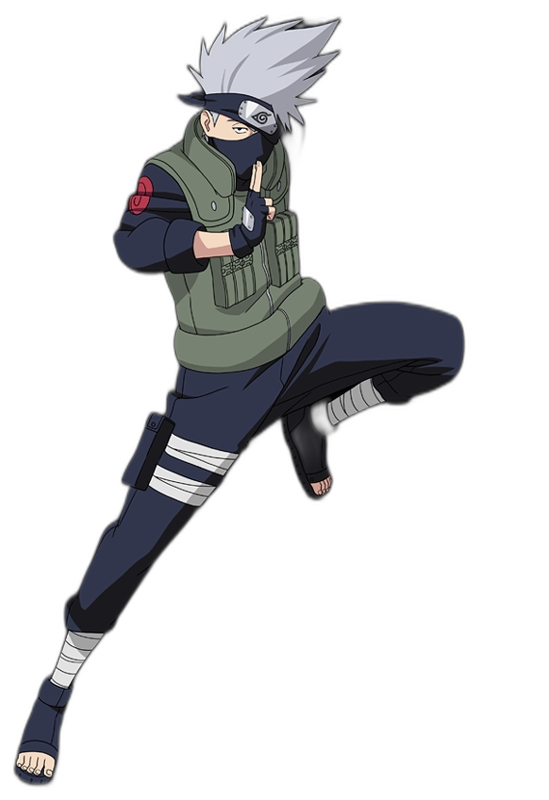
What Is the Chidori?
The Chidori, also known as the Thousand Birds technique, is an A-rank Lightning Release ninjutsu created by Kakashi Hatake during his youth. The technique concentrates a massive amount of lightning chakra into the user's hand, producing a distinctive sound resembling thousands of chirping birds — hence the name. Unlike most Lightning Release techniques that focus on ranged attacks or body enhancement, the Chidori is a specialized assassination technique designed for high-speed piercing thrusts that can cut through almost any material.
Kakashi developed the Chidori after witnessing the death of his teammate, Obito Uchiha, during the Third Great Ninja War. The near-death experience pushed Kakashi to create a technique powerful enough to protect his remaining comrades and fulfill Obito's wish for him to become a respected Jonin. However, the original Chidori had a critical flaw: the user's forward momentum was so fast that it created tunnel vision, leaving them vulnerable to counterattacks from the side. This weakness meant only shinobi with a Sharingan could effectively use the Chidori in combat, as the Sharingan's predictive abilities compensated for the visual blind spot.
The technique later became Sasuke Uchiha's signature move after Kakashi taught it to him during the Team 7 training before the Chunin Exams. Sasuke's usage of the Chidori evolved significantly throughout the series, from the basic version he used against Gaara during the Chunin Exams (episode 68) to increasingly powerful variants that defined his combat style as an adult. The rivalry between the Chidori and Naruto's Rasengan became one of the central themes of the Naruto series, representing the philosophical contrast between precision-based lightning and raw power-based chakra manipulation.
How the Chidori Works
The Chidori operates on a combination of shape transformation and nature transformation. The user first gathers Lightning Release chakra and concentrates it in their palm, then shapes it into a concentrated blade or spear of electricity. Unlike the Rasengan, which relies purely on shape transformation, the Chidori adds the nature transformation of Lightning Release — giving it not only piercing power but also electrical paralysis effects on contact. This dual-transformation requirement makes the Chidori more technically complex than a pure shape transformation technique but also more versatile in combat applications.
The chakra concentration required for the Chidori is immense. The user's hand becomes enveloped in visible lightning that crackles and arcs outward, generating the technique's namesake chirping sound. The visible lightning is not just a visual effect — it represents the intense chakra density needed to maintain the technique. This concentration creates a blade-like edge that can cut through stone, steel, and most defensive jutsu with ease. When used at full power, the Chidori generates enough electrical charge to light up a dark area and can be heard from significant distances.
The high-speed movement required to land a Chidori strike is both its greatest strength and most dangerous weakness. The user must accelerate to maximum speed to deliver a decisive thrust, but this speed creates severe tunnel vision — the user cannot see anything outside their direct line of attack. Without the Sharingan's predictive capabilities, an enemy could easily counterattack from the side while the user commits to the forward thrust. This limitation led to the technique being classified as a kinjutsu (forbidden technique) in Konoha's records, only to be used by Sharingan-wielding shinobi.
Types and Variants
The Chidori has spawned numerous variants across the Naruto and Boruto series, each adapting the base technique for different combat scenarios. These variants demonstrate the Chidori's versatility as a foundation technique that can be modified for defense, area control, ranged attack, and even battlefield manipulation.
Raikiri (Lightning Cutter). This is Kakashi's signature version of the Chidori, distinguished by its enhanced power and wider range of the lightning blade. The name Raikiri comes from a legendary feat: Kakashi once used the technique to split a bolt of lightning in half during the Third Great Ninja War. In practice, Raikiri functions as a more powerful Chidori with a broader electrical discharge radius. Kakashi used Raikiri extensively throughout the series, including against Zabuza Momochi in the Land of Waves arc (episode 11), against Itachi Uchiha during their encounters, and against Kakuzu during the Hidan and Kakuzu arc (Shippuden episode 84).
Chidori Nagashi (Lightning Current). A defensive variant that Sasuke developed, where he releases the Chidori's electrical current throughout his entire body rather than concentrating it in his palm. This turns his body into an electrified barrier that paralyzes anything it touches. Sasuke first used Chidori Nagashi during his fight against Orochimaru in the Forest of Death (Shippuden episode 34), catching the Snake Sannin off guard. The technique is exceptionally useful against groups of attackers or opponents who rely on physical contact, as each strike returns electrical damage to the attacker.
Chidori Senbon (Lightning Senbon). A ranged variant where the user shapes the Chidori's lightning into multiple needle-like projectiles that can be fired in a spread pattern. Sasuke developed this variant for precision strikes against multiple targets or hard-to-reach opponents. He used Chidori Senbon against Itachi during their confrontation (Shippuden episode 136), aiming for Itachi's vital points while maintaining distance — a tactical choice that acknowledged Itachi's superiority in close combat.
Kirin. Sasuke's ultimate Lightning Release technique, developed during the fight against Itachi. Rather than generating lightning from his own chakra, Kirin manipulates real atmospheric lightning by heating the air with Fire Release to create storm clouds, then guiding the resulting lightning bolt with a single Chidori-shaped conductor. The technique strikes at the speed of natural lightning — approximately 1/1000th of a second — making it virtually impossible to dodge. Sasuke used Kirin against Itachi (Shippuden episode 137), and the attack destroyed the entire Uchichi hideout, though Itachi survived by using Susanoo at the last moment.
Chidori Eisou (Lightning Sword). A variant that extends the Chidori into a blade of any length, creating a lightning sword. Sasuke first demonstrated this technique during the Five Kage Summit arc (Shippuden episode 196), extending the blade to strike Danzo's guards from a considerable distance. Unlike the base Chidori's close-range thrust, Eisou provides mid-range combat capability while retaining the electrical paralysis properties of the original technique.
Purple Lightning. Kakashi's post-Chidori variant, developed after losing his Sharingan at the end of the Fourth Great Ninja War. Without the Sharingan to control the Chidori's tunnel vision, Kakashi created Purple Lightning as a safer alternative. The technique shares the Chidori's piercing and paralyzing properties but produces purple-colored lightning and can be used without the high-speed dash that made the original Chidori dangerous. Kakashi used Purple Lightning in Boruto: Naruto the Movie and Boruto episode 19, demonstrating that his ingenuity extended beyond his copied techniques.
Notable Users
Kakashi Hatake. The creator and original master of the Chidori. Kakashi developed the technique as a child prodigy, becoming a Jonin at age 13 and creating an A-rank technique that most adult shinobi would struggle to master. After receiving Obito's Sharingan, Kakashi became the first person who could use the Chidori safely in combat, compensating for the tunnel vision flaw with the Sharingan's predictive sight. His use of Raikiri against Zabuza in the very first arc of the series remains one of the most iconic moments in all of Naruto, establishing Kakashi as a shinobi of unparalleled skill whose name was feared across the shinobi world.
Sasuke Uchiha. The most prolific user and innovator of the Chidori. Kakashi taught Sasuke the Chidori during a week-long training session before the Chunin Exams (episodes 67-68), recognizing Sasuke's potential and Lightning Release affinity. Sasuke not only mastered the base technique but created more variants of the Chidori than any other shinobi — Chidori Nagashi, Chidori Senbon, Chidori Eisou, the partnered Chidori combined with Naruto's Rasengan, and the legendary Kirin. Each variant reflected Sasuke's tactical evolution: from direct assault to defensive adaptation to precision ranged attacks to atmospheric manipulation.
Sarada Uchiha. Sasuke's daughter, who inherited the Chidori and demonstrated proficiency with it during the Boruto series. Sarada's version of the Chidori is smaller and more controlled, reflecting her precise chakra control and analytical combat style. She first used the technique against Shin Uchiha (Boruto episode 36), and has since demonstrated the ability to combine it with her Sharingan for precision strikes similar to her father's approach.
Boruto Uzumaki. While Boruto's primary technique is the Vanishing Rasengan, he has also shown proficiency with Lightning Release techniques after learning from Sasuke during his training for the Chunin Exams. His mastery of Lightning Release nature transformation, combined with his inborn talent for Wind Release, makes him one of the few shinobi capable of using both the Chidori (via Lightning Release) and the Rasengan (via shape transformation). This dual-affinity is exceptionally rare, inherited from his father's Wind Release and his mother Hinata's Lightning Release affinities.
Strengths and Weaknesses
Strengths. The Chidori's primary advantage is its concentrated piercing power. Unlike the Rasengan's grinding crush, the Chidori's lightning blade can cut through almost any material — rock, steel, earth, and most defensive jutsu — with a single thrust. The electrical properties of the technique also provide secondary effects: paralysis on contact, temporary nerve damage that disrupts an opponent's mobility, and the ability to conduct through water or conductive surfaces for indirect attacks.
The technique's versatility through variants is another major strength. The base Chidori alone would be a powerful but limited technique; the variants Sasuke and Kakashi developed transform it into a complete combat system. Defensive applications (Chidori Nagashi), ranged attacks (Chidori Senbon), mid-range cutting (Chidori Eisou), and atmospheric manipulation (Kirin) mean a skilled user can adapt the Chidori's lightning properties to any combat scenario without needing to switch to fundamentally different techniques.
The Chidori also carries significant psychological impact. The distinctive chirping sound creates an audible warning that often intimidates opponents before the technique even lands. In the Naruto universe, hearing the Chidori's sound signals impending high-speed death — a psychological weapon that has caused many opponents to freeze or make panicked decisions in battle.
Weaknesses. The most significant limitation is the tunnel vision problem. The high-speed forward dash required to deliver an effective Chidori strike leaves the user blind to their surroundings. Without the Sharingan or exceptional spatial awareness, a Chidori user is vulnerable during the attack's execution — a skilled opponent can sidestep and counterattack with devastating effect. This fundamental flaw is why Kakashi classified the Chidori as a kinjutsu, restricting its use to Sharingan users only.
The technique's chakra cost is also substantial. The Chidori requires a dense concentration of Lightning Release chakra that is difficult to maintain. Before gaining his Six Paths power and the Rinnegan, Sasuke could only use the Chidori a limited number of times per battle — typically three to five uses before his chakra reserves were depleted enough to affect his combat performance. Kakashi, with his smaller chakra reserves as a non-jinchuriki, was even more limited, often using the Chidori only once or twice in critical moments.
The Chidori's reliance on Lightning Release also creates elemental disadvantages. Against Earth Release users, the Chidori is less effective due to the elemental wheel (Earth > Lightning). Additionally, opponents with Lightning absorption abilities, such as Kakuzu's Lightning Release mask, can neutralize the Chidori entirely. The technique is also largely ineffective against non-physical defenses like Susanoo or the Tailed Beast Ball, which require overwhelming force rather than precise piercing.
Frequently Asked Questions
Who created the Chidori?
The Chidori was created by Kakashi Hatake during his youth, after the death of his teammate Obito Uchiha in the Third Great Ninja War. Kakashi developed the technique as a powerful assassination method to protect his remaining comrades, but the technique's tunnel vision weakness meant only shinobi with a Sharingan could use it safely. It later became Sasuke Uchiha's signature technique after Kakashi taught it to him before the Chunin Exams.
Why is the Chidori also called Raikiri?
Raikiri, meaning Lightning Cutter, is the upgraded name for Kakashi's Chidori. The name originates from a legendary feat during the Third Great Ninja War, where Kakashi used the technique to split a bolt of natural lightning in half. After this feat, the technique became widely known as Raikiri, though Chidori remains the base name for the technique and its variants. Kakashi typically refers to his version as Raikiri while the Chidori name is used generically for all variants.
Can the Chidori be used without the Sharingan?
Theoretically yes, but it is extremely dangerous. The Chidori's high-speed thrust creates severe tunnel vision, leaving the user unable to perceive attacks coming from the side. Without the Sharingan's predictive sight to compensate for this blind spot, the user is highly vulnerable to counterattacks. This limitation is why the Chidori was classified as a forbidden technique in Konoha. Kakashi developed Purple Lightning after losing his Sharingan as a safer alternative that provides similar combat benefits without the tunnel vision risk.
What is the difference between Chidori and Rasengan?
The Chidori and Rasengan are fundamentally different in their chakra manipulation principles. The Chidori combines shape transformation with Lightning Release nature transformation, creating a piercing blade that can cut through materials and paralyze on contact. The Rasengan is pure shape transformation without any nature element, creating a spinning sphere that grinds and crushes rather than pierces. The Chidori requires hand seals to activate, while the Rasengan does not. The Chidori creates tunnel vision risk; the Rasengan has no such limitation. These differences reflect the creators' combat philosophies: Kakashi's precision-based lightning versus Minato's raw chakra manipulation.
What is Kirin and how does it relate to the Chidori?
Kirin is Sasuke's ultimate Lightning Release technique, developed during his training before the fight against Itachi Uchiha. Unlike the Chidori which generates lightning from the user's own chakra, Kirin manipulates natural atmospheric lightning. Sasuke first uses Fire Release to heat the air rapidly, creating convection and forming storm clouds above the battlefield. He then uses a single Chidori-shaped lightning conductor to guide the resulting lightning bolt toward his target. Kirin strikes at the speed of natural lightning — approximately 1/1000th of a second — making it the fastest attack in the Naruto series and virtually undodgeable. Sasuke used Kirin against Itachi in Shippuden episode 137, destroying the entire Uchiha hideout.
External Sources
For readers interested in deeper exploration of the Chidori, the following external resources provide comprehensive information about the technique's lore, appearances, and cultural impact:
- Chidori — Naruto on Wikipedia — General overview of the Naruto series and its iconic techniques including the Chidori.
- Chidori — Naruto Fandom Wiki — Detailed technical breakdown of all Chidori variants, including manga chapter references and anime episode appearances.
- Naruto — MyAnimeList — Official series page with episode guides, character profiles, and community ratings for the original Naruto anime.