# Overview
The Uchiha clan is one of the four noble clans of Konohagakure, renowned throughout the shinobi world for their exceptional combat prowess and the unique dojutsu known as the Sharingan. Founded by Indra Otsutsuki, the elder son of Hagoromo Otsutsuki (the Sage of Six Paths), the Uchiha possess a direct bloodline connection to the progenitor of chakra itself. This heritage grants them extraordinarily powerful chakra reserves and a natural aptitude for combat, particularly in Fire Release techniques that they wield with devastating efficiency across the battlefield.
Throughout Konoha's history, the Uchiha have produced some of the most powerful shinobi ever recorded. Madara Uchiha, the clan's leader during the Warring States Period, was feared as a living god of war and later became a central threat during the Fourth Great Ninja War. His legendary rivalry with Hashirama Senju defined an era of constant conflict, and their eventual alliance led to the founding of Konohagakure as the first hidden village system. The clan's police force, established as a compromise to integrate them into village life, became both a symbol of their privileged status and a source of growing resentment from the wider village population.
However, the Uchiha clan is also afflicted by what the ninja world calls the "Curse of Hatred." This describes the Uchiha's tendency toward intense emotional attachment that, when twisted by trauma or loss, drives its members toward darkness and an all-consuming desire for revenge. The curse is physically manifested in the Sharingan itself, which evolves through emotional suffering. The clan's tragic arc from Konoha's founding to the Massacre demonstrates how their immense power and pride ultimately led to their near-total annihilation. Understanding the Uchiha clan is essential to understanding the entire Naruto storyline, as their legacy directly shapes the motivations and actions of Sasuke, Itachi, Madara, and Obito.
# History & Origins
The Uchiha clan traces its lineage directly to Indra Otsutsuki, the elder son of Hagoromo Otsutsuki. According to legend recorded on the Shinobi Stone Tablet hidden within the Naka Shrine, Hagoromo divided his inheritance between his twin sons before ascending to the moon. He granted his eyes and spiritual energy to Indra, which gave rise to the Sharingan, while bequeathing his body and immense physical energy to Ashura. This division created an eternal philosophical conflict: Indra believed power was inherited and strength came from individual ability, while Ashura believed power grew through cooperation and bonds with others. This fundamental schism became the Curse of Hatred that would plague the Uchiha bloodline for countless generations.
The clan's name "Uchiha" is a deliberate pun on "uchiwa" (hand fan), referencing both the clan's Fire Release abilities that fan flames into massive infernos and the iconic gunbai war fans wielded by Madara and Obito. During the centuries-long Warring States Period, the Uchiha clan was locked in brutal conflict with the Senju clan over territory and vengeance. Generations of children were raised as soldiers and sent to die on battlefields over grievances so ancient that their original causes had been forgotten. Madara lost four of his brothers during this period, including his closest sibling Izuna, who sacrificed his Mangekyo eyes to Madara before dying from his wounds. Izuna's death crystallized Madara's belief that the Senju could never be trusted.
The Uchiha were central to the founding of Konohagakure. Hashirama Senju, hoping to build lasting peace, offered Madara the position of Hokage first, but Madara refused on the advice of Izuna's dying warning about Senju treachery. Hashirama became the First Hokage, and the Uchiha clan was granted the role of Konoha's military police force as a compromise to integrate them into village governance. Madara, disillusioned by what he perceived as Senju dominance and Hashirama's supreme authority, eventually left the village and faked his death at the Valley of the End. From the shadows, he began secretly planning his eventual revival and the Infinite Tsukuyomi project that would take decades to set in motion.
# Key Members
Madara Uchiha
Madara Uchiha was the most powerful Uchiha in recorded history. As clan leader during the Warring States Period, he fought alongside Hashirama Senju to end centuries of bloodshed and co-founded Konohagakure. After growing disillusioned with Senju dominance, Madara faked his death at the Valley of the End and spent decades manipulating events from the shadows. He saved Obito's life, indoctrinated him into his ideology, and created the Akatsuki through Nagato as a vehicle for his plans. Madara achieved the Rinnegan, used it to summon the Demonic Statue of the Outer Path, and engineered his own resurrection during the Fourth Great Ninja War. His ultimate goal was the Infinite Tsukuyomi, a planetary genjutsu designed to trap all humanity in an eternal dream world.
Itachi Uchiha
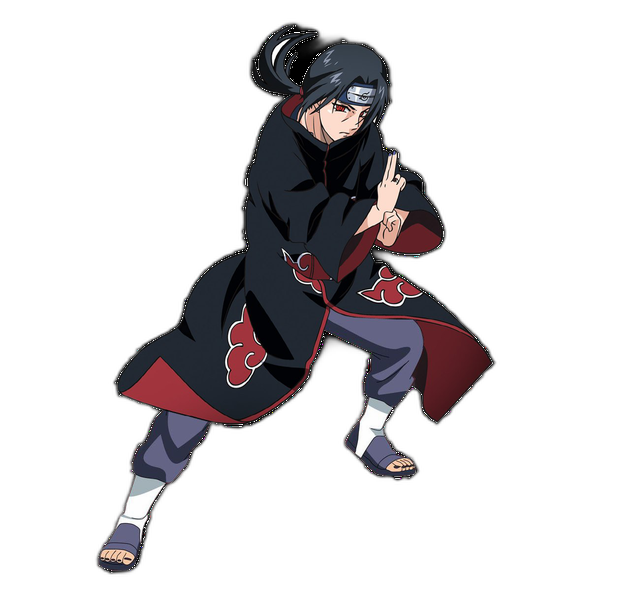
Itachi Uchiha was a prodigy who awakened his Sharingan at age eight, became a Chunin at ten, and joined the ANBU Black Ops at eleven, making him the youngest ANBU captain in Konoha's history. Forced by Danzo Shimura into an impossible position, Itachi chose to massacre the entire Uchiha clan to prevent a devastating civil war, sparing only his younger brother Sasuke. He joined the Akatsuki as a double agent, protecting Konoha from within the criminal organization. During the Fourth Great Ninja War, Itachi was resurrected by Kabuto's Edo Tensei, broke free of the control jutsu using Shisui's Kotoamatsukami, and helped defeat Kabuto before his soul was finally released. The truth about Itachi's sacrifice is one of the most pivotal revelations in the entire series.
Obito Uchiha
Obito Uchiha was believed dead during the Third Great Ninja War after being crushed by a boulder while saving Kakashi. Rescued and rebuilt by Madara's Zetsu, he embraced Madara's ideology after witnessing Rin's death by Kakashi's Chidori, an event that instantly evolved his Sharingan from two tomoe directly to Mangekyo. As "Tobi," Obito orchestrated the Nine-Tails attack on Konoha that killed the Fourth Hokage Minato Namikaze, manipulated the Fourth Mizukage into becoming a tyrant, and co-founded the modern Akatsuki. He later redeemed himself during the war by sacrificing his life to protect Naruto and help seal Kaguya Otsutsuki, passing his Sharingan's legacy to Kakashi temporarily for one final Kamui use.
Shisui Uchiha
Shisui Uchiha was known as "Shisui of the Body Flicker" for his extraordinary speed and mastery of the Body Flicker Technique. He possessed Kotoamatsukami, the most powerful genjutsu in the Uchiha clan's history, which could enter a target's mind and alter their will without any detectable traces. Danzo Shimura stole one of Shisui's eyes, fearing his ability could derail Root's plans for manipulating the Uchiha coup. Shisui entrusted his remaining eye to his best friend Itachi and staged his own death by drowning in the Naka River to avoid being forced into direct conflict with his own clan.
Fugaku Uchiha
Fugaku Uchiha, father of Itachi and Sasuke, was the leader of the Uchiha clan during the events leading to the massacre. A powerful shinobi who possessed his own Mangekyo Sharingan, Fugaku was a candidate for the Fourth Hokage position but was passed over in favor of Minato Namikaze. His growing frustration with the village's systematic marginalization and suspicion of the Uchiha clan drove him to organize the coup attempt that ultimately sealed the clan's fate. In his final moments, Fugaku faced Itachi with understanding rather than anger, telling his son he was proud of him.
# The Uchiha Massacre
The Uchiha Massacre is one of the most pivotal events in the Naruto storyline, serving as the foundational backstory for both Itachi and Sasuke while revealing the dark political realities beneath Konoha's peaceful facade. Approximately seven years before the main series timeline begins, Itachi Uchiha, then a 13-year-old ANBU captain, was given an impossible choice by Danzo Shimura: eliminate his entire clan in a single night or allow a full-scale civil war that would devastate Konoha and leave it vulnerable to enemy villages such as Kumogakure and Iwagakure.
The massacre's roots extend back decades of escalating tension. After the Nine-Tails attack on Konoha, the village leadership immediately suspected Uchiha involvement because only a Mangekyo Sharingan user could control the fox. Obito, working under Madara's orders, had deliberately orchestrated the attack precisely to inflame anti-Uchiha sentiment. The clan was relocated to a walled compound on the village's outskirts, placed under constant ANBU Root surveillance, and systematically excluded from all major decision-making. Despite serving faithfully as Konoha's military police force, they were treated as potential threats rather than loyal citizens.
Fugaku Uchiha, frustrated by decades of marginalization, organized a coup d'etat with support from clan elders. The plan was to overthrow the Hokage's administration by force during an upcoming ceremony. Danzo, learning of the plot through his Root spy network, approached Itachi with the ultimatum. If the coup proceeded, it would trigger a war that would devastate Konoha from within and leave it vulnerable to external enemies. Itachi chose to sacrifice his clan for the greater good, accepting the mission on one absolute condition: his younger brother Sasuke must be spared. Obito, who had his own grievances against the clan, agreed to assist Itachi in the massacre.
The massacre was swift and methodical. Itachi moved through the Uchiha compound killing every man, woman, and child. He personally confronted his parents, Fugaku and Mikoto, in their home. In their final moments, both accepted their fate with quiet dignity. Fugaku told Itachi "You are truly a kind child" and both parents expressed their pride, asking only that Itachi take care of Sasuke. After the massacre, Konoha's leadership constructed an elaborate cover story blaming Itachi as a rogue murderer who slaughtered his clan for personal power. This deception allowed Sasuke to grow up believing his brother was a heartless monster, a lie that ultimately backfired spectacularly when Sasuke's obsessive quest for revenge consumed him, led him to defect to Orochimaru, and nearly destroyed both himself and the village.
# Clan Legacy & Influence
The Uchiha clan's influence extends far beyond their physical extinction. The clan's legacy is carried forward primarily through Sasuke and his daughter Sarada, who represents the next generation of Uchiha potential. Sarada awakened her Sharingan at a young age, demonstrating that the bloodline continues strong despite the clan's near-total destruction. The Uchiha's techniques and philosophies remain central to the Naruto universe, with the Sharingan continuing to play a crucial role in protecting Konoha from emerging threats in the Boruto era.
The Uchiha clan's former compound, left abandoned after the massacre, became a haunting memorial to the tragedy. Sasuke rarely visited the site, but the empty streets and shuttered homes serve as a permanent reminder of the cost of political manipulation and the cycle of hatred. The Naka Shrine, hidden beneath the Uchiha district, contains the Shinobi Stone Tablet that once guided Madara and Obito's plans. This tablet, modified by Black Zetsu to mislead the Uchiha about the Infinite Tsukuyomi, represents how the clan's own history was weaponized against them across generations.
Beyond the narrative, the Uchiha clan has become one of the most recognizable fictional clans in popular culture. The Sharingan appears in countless fan works, memes, and references across anime and gaming communities worldwide. The clan's distinctive red-and-black color scheme, their iconic crest depicting a gunbai fan, and their philosophy of power through pain have influenced the design of similar groups in other anime and games. Characters like Madara and Itachi consistently rank among the most popular in official Shonen Jump character polls and have inspired extensive merchandise, cosplay, and academic analysis of their moral complexity.
# FAQ
What caused the Uchiha clan's near-extinction?
The Uchiha clan's near-extinction resulted from the Uchiha Massacre, an event ordered by Konoha's Danzo Shimura and carried out by Itachi Uchiha with Obito's assistance to prevent a coup that would have devastated the village. Only Sasuke and Obito survived with active Sharingan abilities.
How does the Sharingan differ between Uchiha members?
While all Sharingan share basic abilities like chakra perception and technique copying, each Mangekyo manifests unique abilities. Itachi's Tsukuyomi distorts time perception, Shisui's Kotoamatsukami rewrites memories undetectably, Obito's Kamui provides intangibility, and Sasuke's Amaterasu produces inextinguishable black flames.
Who is considered the strongest Uchiha in history?
Madara Uchiha is widely considered the strongest, having achieved the Rinnegan, mastered Perfect Susanoo, fought Hashirama Senju to a standstill, and nearly succeeded in casting the Infinite Tsukuyomi. Sasuke with his dual Rinnegan-Eternal Mangekyo configuration is a close contender at his peak power during the war.
Why did the Uchiha specialize in Fire Release techniques?
The Uchiha's Fire Release affinity is hereditary, tied to their Otsutsuki lineage from Indra. The Great Fireball Technique (Katon: Gokakyu no Jutsu) is traditionally used as a coming-of-age ritual for young Uchiha. Madara could create firestorms spanning entire battlefields with his Fire Release mastery.
Are there any Uchiha clan members alive after the series?
Yes. Sasuke Uchiha and his daughter Sarada Uchiha are the known living descendants with active Sharingan abilities. Through Indra's reincarnation cycle the clan's chakra lineage continues, but the direct bloodline carrying the Sharingan is limited to Sasuke's descendants.